The Artists on the Frequency - the station's own singers, bands and sound systems. One act at a time; pick a name to hear who they are.
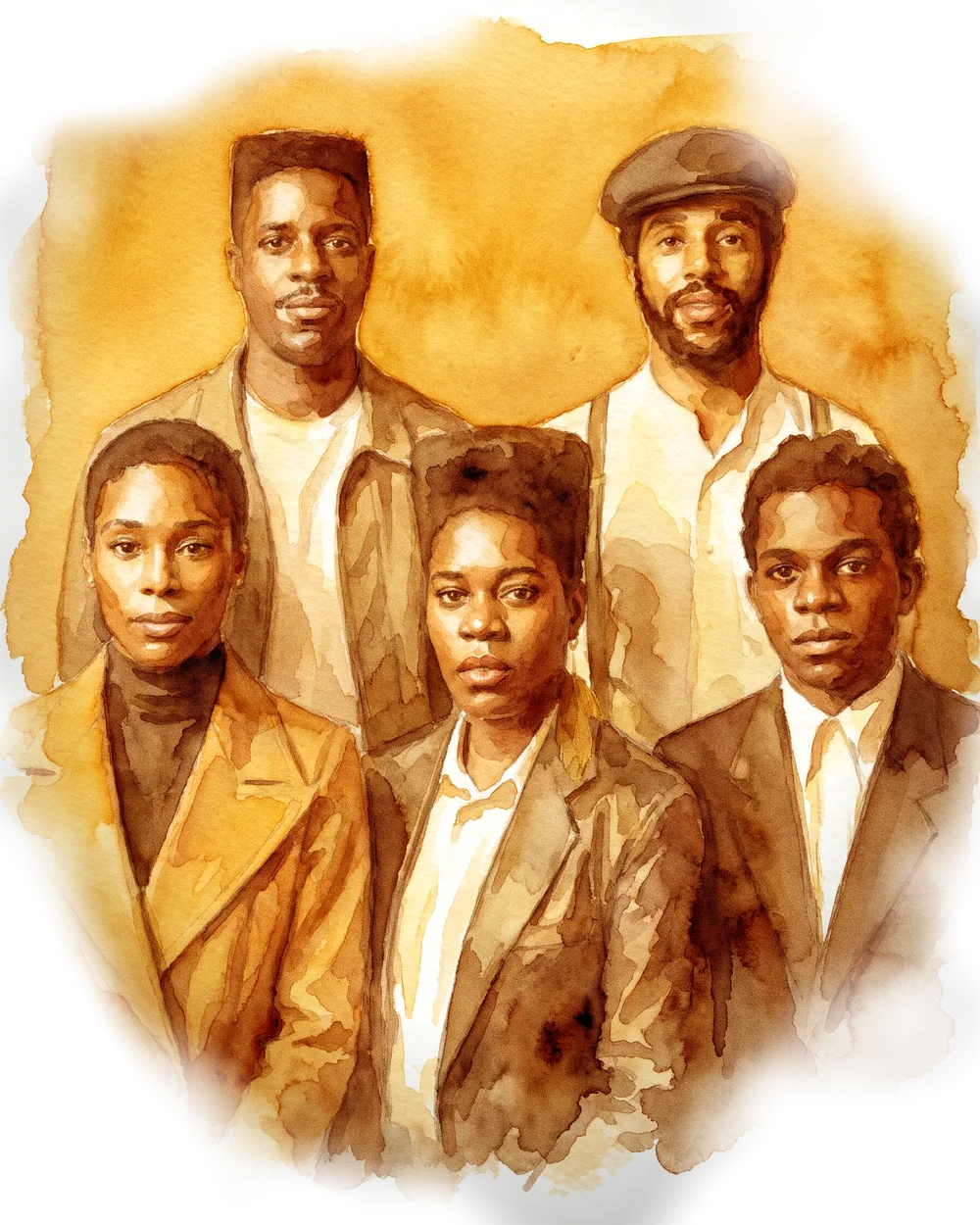
Hoxton Square
Five young Londoners, one small room, the whole history of jazz in a hurry.
Hoxton Square started on a Sunday afternoon in 1986, in a basement off the square where the bands let anyone under twenty-five sit in for the last hour. Jerome Quaye had spent two years blowing tenor for the jazz dancers of Camden with the Chalk Farm Rhythm Section and wanted to play slower than the dancers would allow. Abigail Forde had a scholarship, a Steinway she was only allowed to touch on Tuesdays and a head full of hard-bop sleeves bought for fifty pence on Brick Lane. Omari Carrington carried his double bass on the 55 bus. Delano Frith learned his time in a Newham steel-band youth project and swings like it. Nadine Beckles was seventeen, still at music college, and the loudest person in any room.
The papers that year were full of photographs of Black British teenagers holding saxophones, as if nobody had noticed them before. Hoxton Square didn't care about the photographs. They cared about the tunes: calypso heads their parents would recognise, township lilt learned from the South African players who'd been in these same basements for fifteen years, ballads written on the last bus home up Kingsland Road. Old Street Roundabout is the burner they open with; Last Bus to the Angel is the ballad they close on; Calypso for Nadine is the one the rest of the band wrote to make the youngest member laugh.
Key tracksOld Street Roundabout · Calypso for Nadine · Last Bus to the Angel
- Roots
- Hoxton Square and Old Street, Shoreditch, North-East London
- Lineup
- Jerome Quaye, tenor saxophone, soprano saxophone · Abigail Forde, piano · Omari Carrington, double bass · Delano Frith, drums · Nadine Beckles, trumpet, flugelhorn
- In the lineage of
- the 1950s hard-bop quintets, the South African exile bands of 70s London, the mid-80s young British jazz revival