LTBR.FM
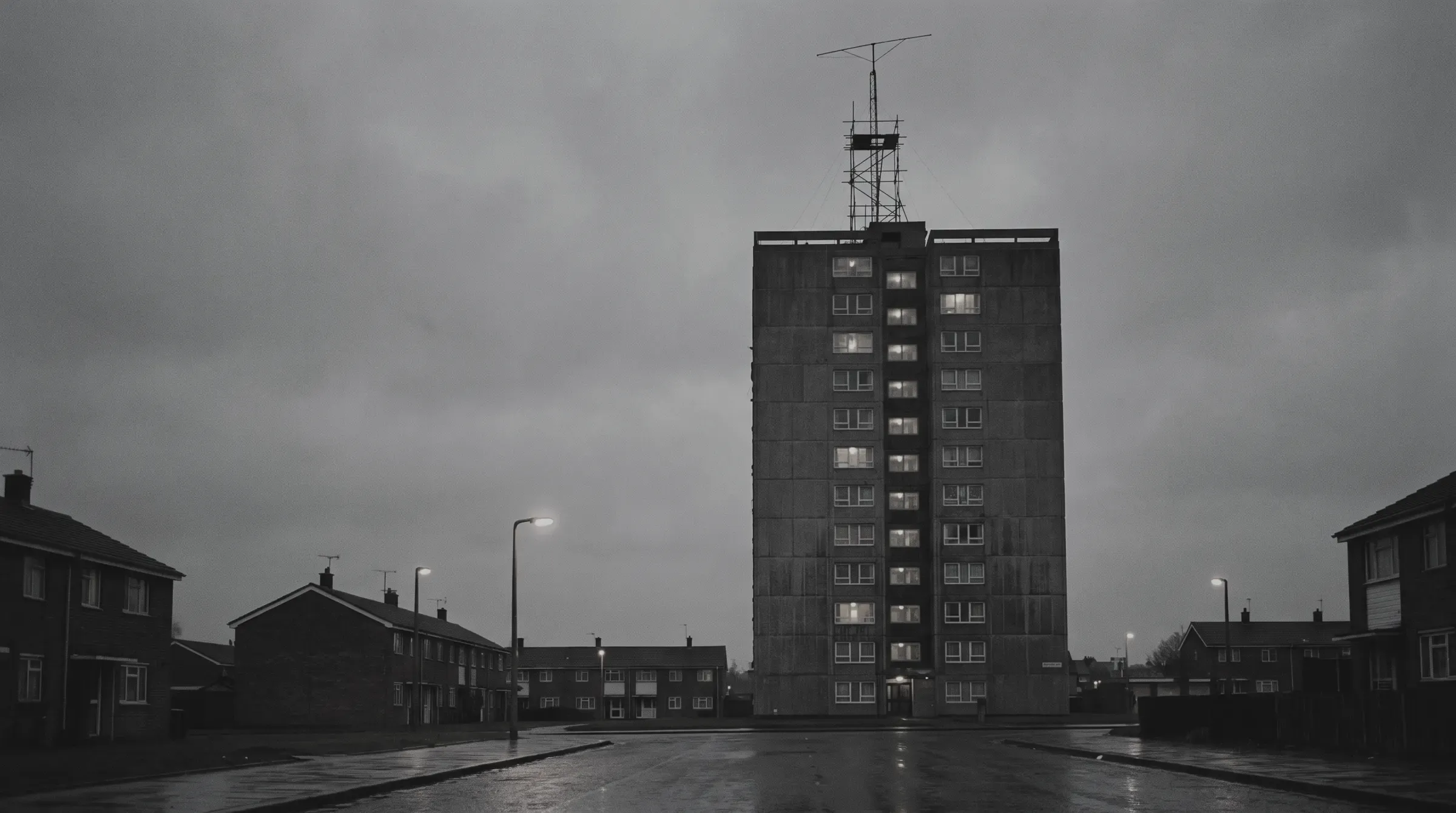
A South London council tower block at dusk, its windows lighting up one by one, a home-made radio aerial on the roof

About LTBR.FM · London Tower Block RadioSome years you remember for the news. Some for the music.

London in the 1980s was a hard place to be young, Black, skint or all three. The news from those years is marches and fires, police vans and dole queues, tower blocks with the lifts out. All of that happened, and we won't pretend otherwise.

But ask the people who lived it what they miss, and nobody says the news. They say the dance. The sound system in the church hall. The blues party with the red bulb. The pirate station only your end of town could pick up. The bus home at five in the morning with a tape still playing in your ears.

LTBR.FM broadcasts that London - the one you'd miss, not the one you'd dread. Lovers rock, roots, dub, soul and boogie, around the clock, with presenters who live in today's London and play the records from the one they grew up in.

The record

What was on the news. What was on the radio.

A short, true ledger of the years our music comes from. In grey, what the papers printed. In amber, what London put on the turntable that same year. We don't play the grey column. We just think you should know it was there.

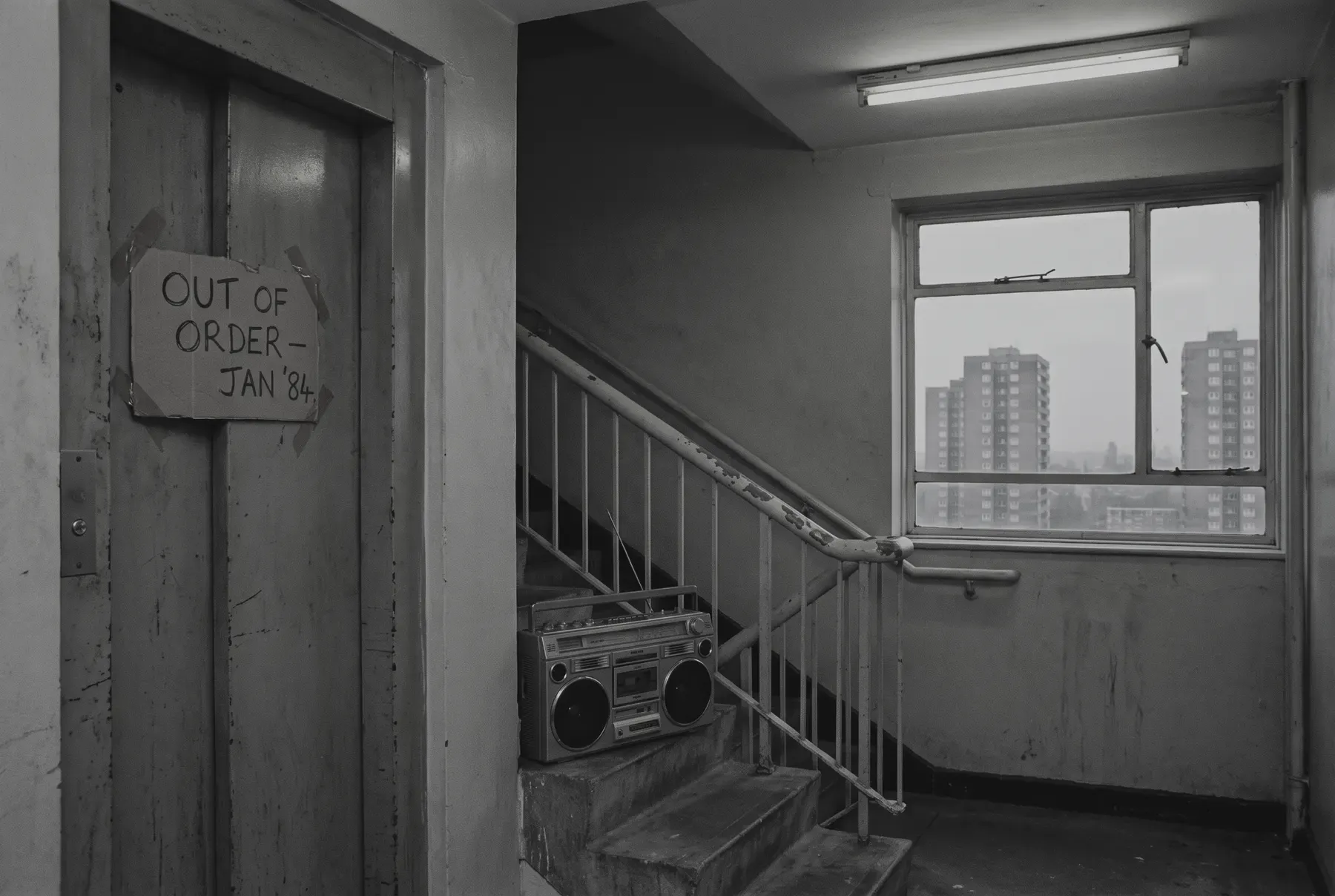
A tower-block stairwell with an out-of-order sign on the lift door and a cassette radio on the stairs
On the news: Lift out of order. Again.“Twelve floors up and the lift's on strike”Concrete Weather · Test Card
  1. Aug 1976
    On the news

    Around 3,000 police are sent to Notting Hill Carnival - ten times the year before. The weekend ends in clashes.

    Source: London Museum ↗
    On the radio

    Static sound systems have taken over the Carnival streets. In South London, a fourteen-year-old Louisa Mark has cut 'Caught You in a Lie' - and a sound is being born that will be called lovers rock.

    Lovers rock ↗
  2. Apr 1978
    On the news

    The National Front is marching through London's streets and standing in its elections.

    Source: Searchlight ↗
    On the radio

    Around 80,000 people march from Trafalgar Square to Victoria Park for Rock Against Racism's Carnival Against the Nazis. Steel Pulse and The Clash play.

    Time Out ↗
  3. Apr 1979
    On the news

    Southall: a protest against a National Front election meeting. A teacher who joined it dies after being struck on the head; it takes thirty years for the police report to be published.

    Source: London Review of Books ↗
    On the radio

    Janet Kay's 'Silly Games', written and produced by Dennis Bovell, climbs to No. 2. Lovers rock - London's own reggae - is in the national charts.

    National Portrait Gallery ↗
  4. Jan 1981
    On the news

    New Cross: thirteen young Black Londoners die in a house fire at a sixteenth birthday party. The community names it the New Cross Massacre. Two inquests return open verdicts; no one has ever been charged.

    Source: History Workshop ↗
    On the radio

    On Sundays, the Dread Broadcasting Corporation sends reggae, lovers rock and soul across West London on 1404 medium wave, from a mast in a back garden.

    DBC ↗
  5. Mar 1981
    On the news

    The Black People's Day of Action: up to 20,000 people march from New Cross to Hyde Park behind the words 'Thirteen Dead and Nothing Said'.

    Source: George Padmore Institute ↗
    On the radio

    Linton Kwesi Johnson is putting the year into verse. His dub poetry - spoken over Dennis Bovell's basslines - becomes the record of what the papers wouldn't say.

    Linton Kwesi Johnson ↗
  6. Apr 1981
    On the news

    Operation Swamp 81 stops 943 people in six days. On 10-12 April Brixton rises - the uprising often called the Brixton riots. Lord Scarman's report follows in November.

    Source: The National Archives ↗
    On the radio

    In Lewisham, Saxon Studio International is building the 'fast chat' MC style. Cassette copies of Saxon dances will travel the world.

    Saxon Studio International ↗
    Atlantic Road, Brixton, 1982
    Atlantic Road, Brixton, 1982 · Photo: Ben Brooksbank · CC BY-SA 2.0
  7. Jul 1981
    On the news

    Unrest spreads to Southall, Toxteth and other cities. In August the 'sus' law - stop and search on suspicion alone - is finally repealed.

    Source: legislation.gov.uk ↗
    On the radio

    The Specials' 'Ghost Town' sits at No. 1 for three weeks - the summer's soundtrack, written about the summer itself.

    Number 1s Blog ↗
  8. Jan 1982
    On the news

    Unemployment passes three million and stays there for years. The new British Nationality Act redraws who counts as a citizen.

    Source: Christian Science Monitor ↗
    On the radio

    Lovers rock is in its golden years: Carroll Thompson's 'Hopelessly in Love' has become the album every front room owns.

    Wax Poetics ↗
  9. 1983
    On the news

    A generation leaves school with nowhere to go. On the estates, the lifts break and stay broken.

    Source: The National Archives ↗
    On the radio

    LWR goes on air on New Year's Day. Eddy Grant's 'Electric Avenue' - named after the Brixton market street - goes to No. 2 here and in America.

    Electric Avenue ↗
    Silwood Estate, Rotherhithe, 1988
    Silwood Estate, Rotherhithe, 1988 · Photo: Miles Glendinning · CC BY 4.0
  10. Mar 1984
    On the news

    The miners' strike begins and runs for a year. A new Telecommunications Act gives officials the power to raid pirate stations and seize their transmitters.

    Source: Pirate radio in the UK ↗
    On the radio

    Smiley Culture's 'Cockney Translation' teaches London to swap its slang both ways, and 'Police Officer' reaches the Top 20.

    Smiley Culture ↗
  11. Oct 1985
    On the news

    Police raids on family homes: in Brixton a mother is shot and paralysed; in Tottenham a mother dies during a search. Unrest follows in both, and at Broadwater Farm a police officer is killed.

    Source: Broadwater Farm ↗
    On the radio

    On 7 October Kiss FM goes on air - a pirate. Five years later it will be London's licensed dance-music station.

    Kiss FM ↗
  12. Mar 1986
    On the news

    The Greater London Council is abolished at midnight. London has no city-wide government until 2000. Ronan Point and its sister towers are pulled down.

    Source: Greater London Council ↗
    On the radio

    Saxon's own Maxi Priest is in the charts with 'Strollin' On'. Two years later Aswad take 'Don't Turn Around' to No. 1.

    Don't Turn Around ↗
The memory

How London got through it

Nobody danced their way out of a recession. But a lot of people danced their way through one. These are the places the music lived - and the places our station lives now.

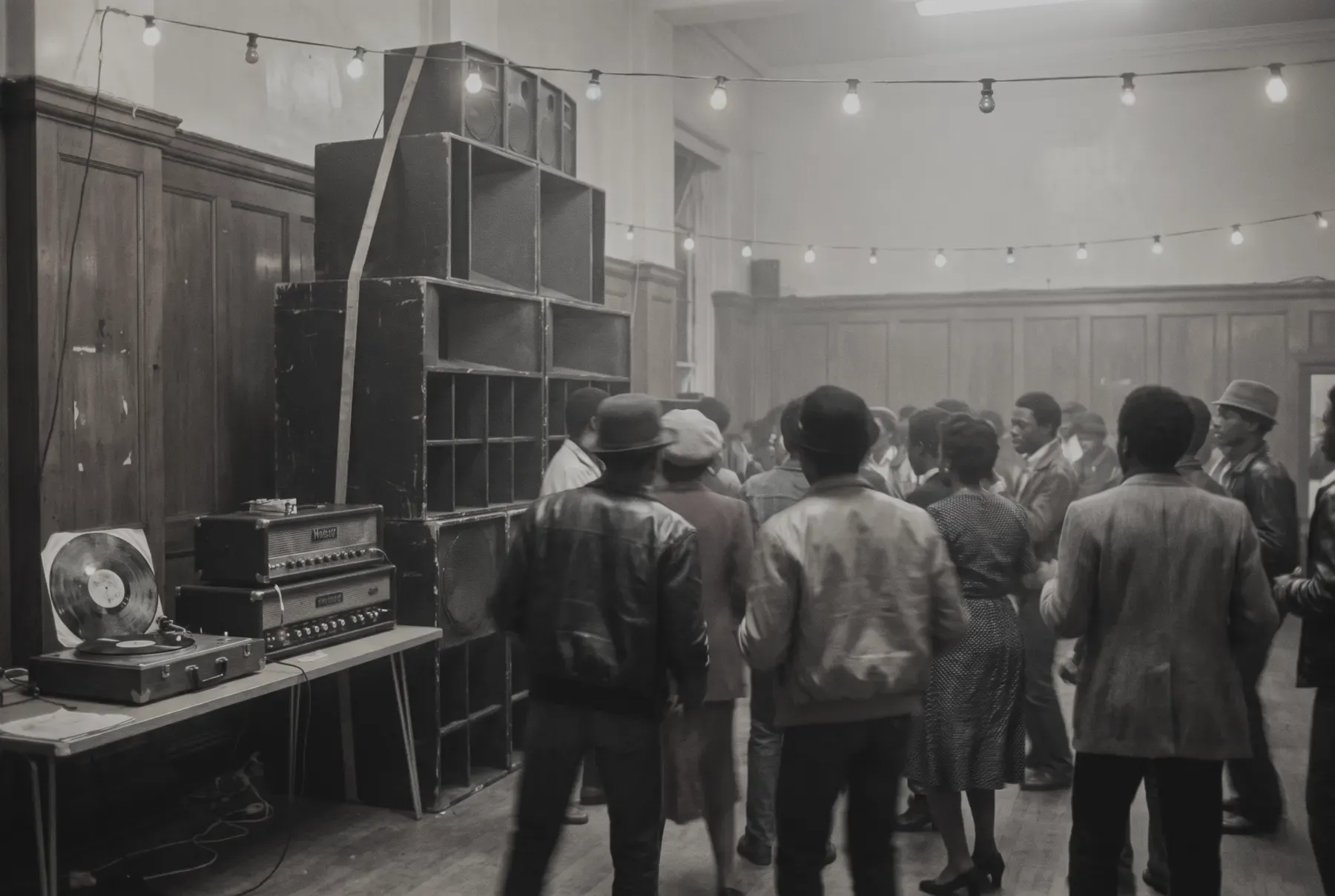
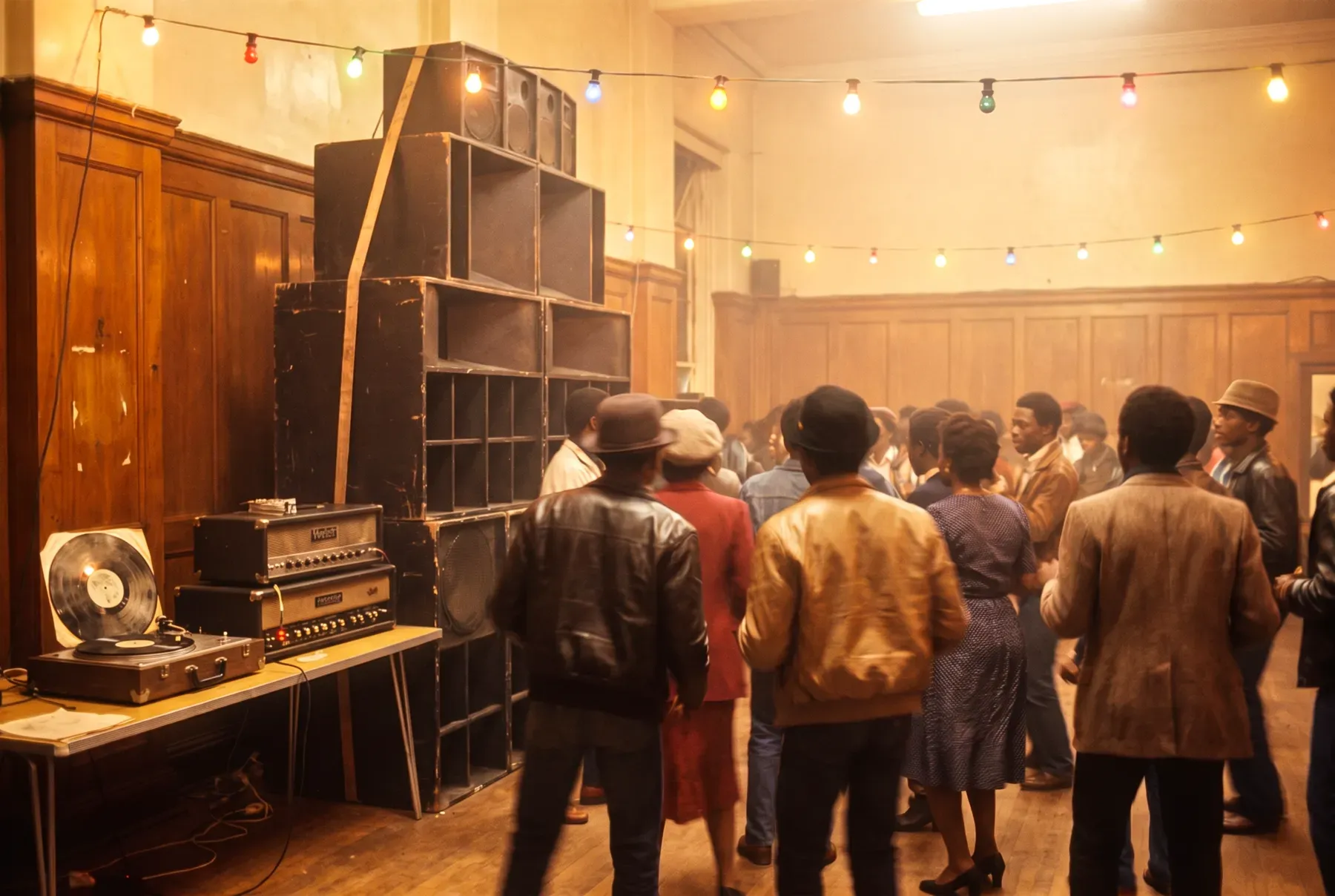
A hand-built reggae sound system stacked to the rafters of a community hall, dancers moving in the haze
On the news: Hall hire, Saturday. Noise complaints by midnight.“The dance is the church and the church is the dance”Three In The Morning · Fordham Park
01 · The sound system

What was a sound system?

A sound system was never just speakers. It was a crew, a name, a reputation and a wall of hand-built boxes - plywood cabinets painted black, scoop bass bins you could feel in your ribs, a valve amp somebody's uncle had rebuilt twice. The selector chose the records, the MC talked over them, and the operator rode the controls like an engineer on a ship.

The tradition came over from Jamaica with the Windrush generation and took root in London's church halls, youth clubs, community centres and front rooms. Through the 1970s and 80s the city's sounds became institutions: Jah Shaka in South-East London, playing exclusive dub plates that nobody else had; Sir Coxsone Outernational, which had been running since the sixties; Saxon Studio International in Lewisham, whose fast-chat MCs changed how British reggae sounded; Fatman Hi-Fi in Tottenham.

A dub plate was a one-off acetate cut for one sound only - a song nobody else could play, sometimes with the sound's own name sung into it. A clash was two sounds in one room, playing against each other until the crowd decided. Cassette tapes of the best dances were copied, recopied and posted around the world.

For a teenager in 1981 who couldn't get into a West End club and wouldn't have wanted to, the sound system was the club, the radio and the newspaper at once. It's where you heard the new tune first. Our station's dub nights and sound-system acts - Fordham Park, Trellick Sound, Woolwich Ferry Hi-Fi, Stonebridge Hi-Power - are written in that tradition.
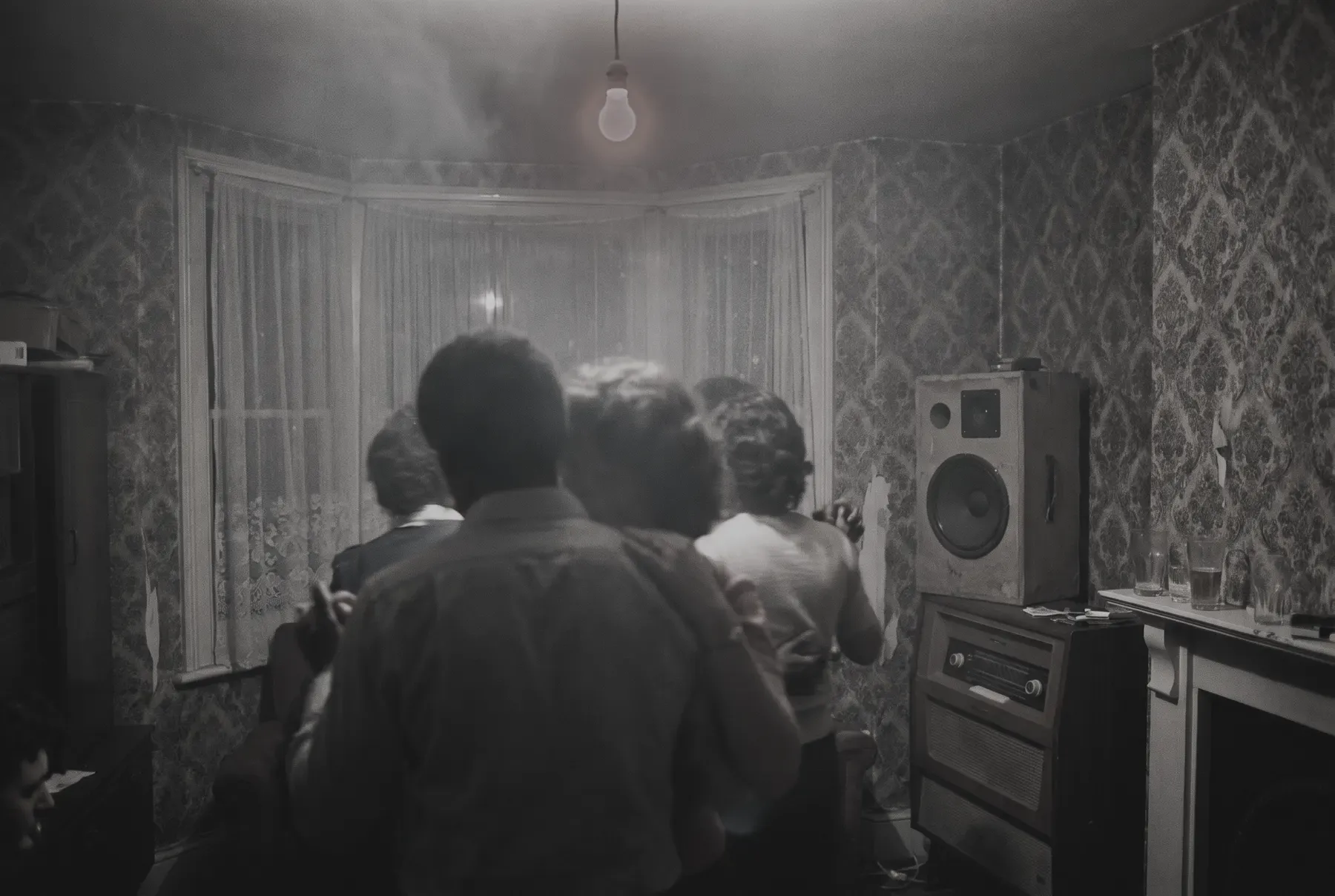
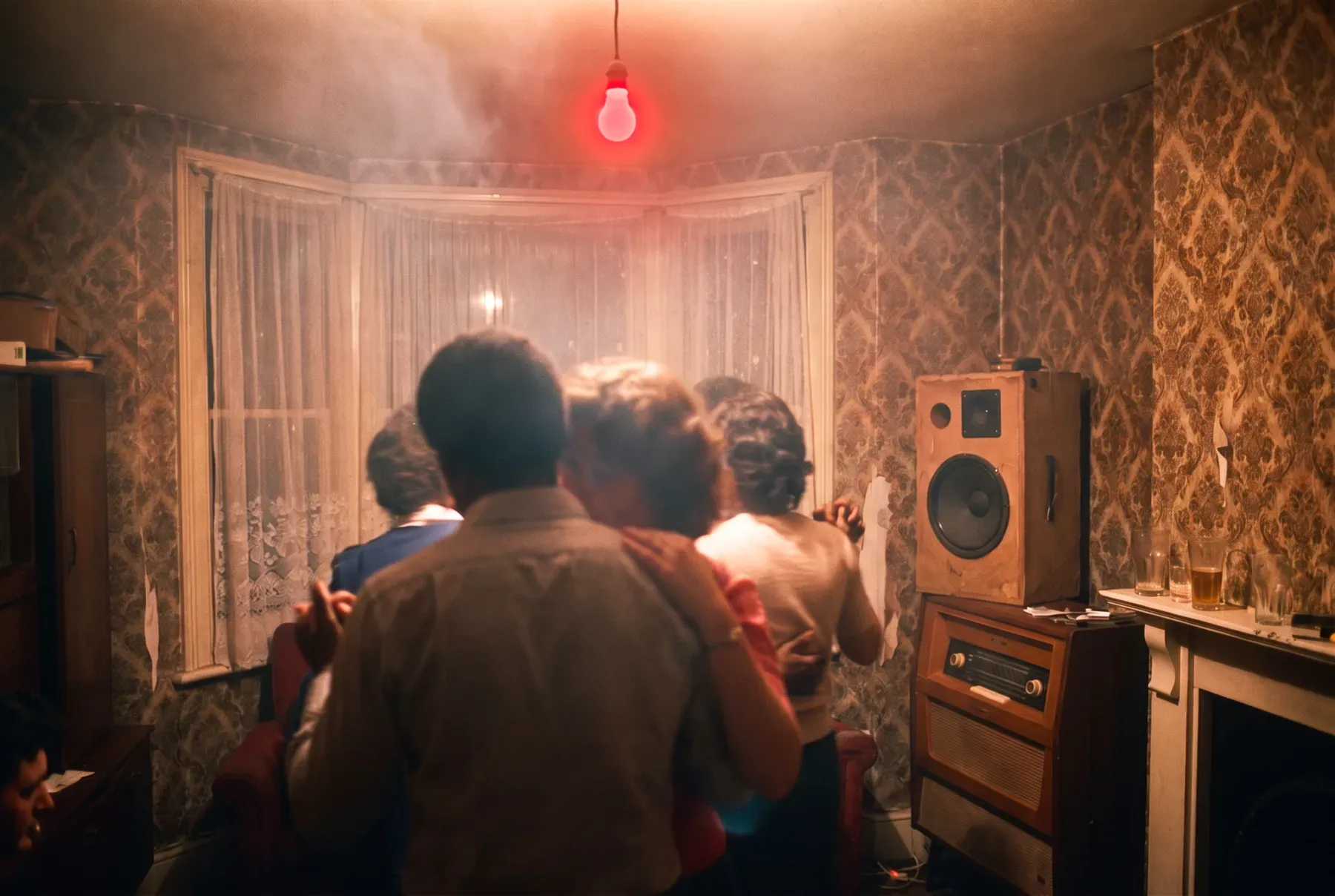
A blues party in a terraced front room under a red bulb, couples slow dancing beside a radiogram
On the news: Unlicensed gathering, private address.“One slow record and it lasts for days”Blues Dance · Delroy Marsh
02 · The blues dance

What is lovers rock - and what was a blues party?

Lovers rock is London's own reggae: sweet, slow, romantic songs sung mostly by young women over heavy bass, born in South London in the mid-1970s. It took its name from Dennis Harris's Lover's Rock label in Brockley, and its sound from producers like Dennis Bovell and John Kpiaye. Louisa Mark recorded 'Caught You in a Lie' at fourteen; Brown Sugar sang 'I'm in Love with a Dreadlocks'; Janet Kay's 'Silly Games' reached No. 2 in 1979; Carroll Thompson's 'Hopelessly in Love' soundtracked a thousand first dances.

Where roots reggae sang about struggle and Babylon, lovers rock sang about the boy at the bus stop and the girl who didn't ring back. That was the point. In years when the news gave young Black Londoners very little tenderness, lovers rock made some.

Its home was the blues party - or blues dance, or shebeen: a party in a private house, usually a terraced front room with the furniture pushed back, a red bulb in the light fitting, a sound in the corner, drinks sold from the kitchen and a door charge at the front. West End clubs often turned young Black people away; the blues never did. They ran from late till light, and the slow records were the ones everyone waited for.

Steve McQueen's film 'Lovers Rock' (2020, part of his Small Axe series) captures one night at a fictional early-80s blues party better than any description can. Our lovers rock acts - Cherry Wilson, Effra, Delroy Marsh, Sister Loretta, Stockwell Rose - sing from those front rooms.

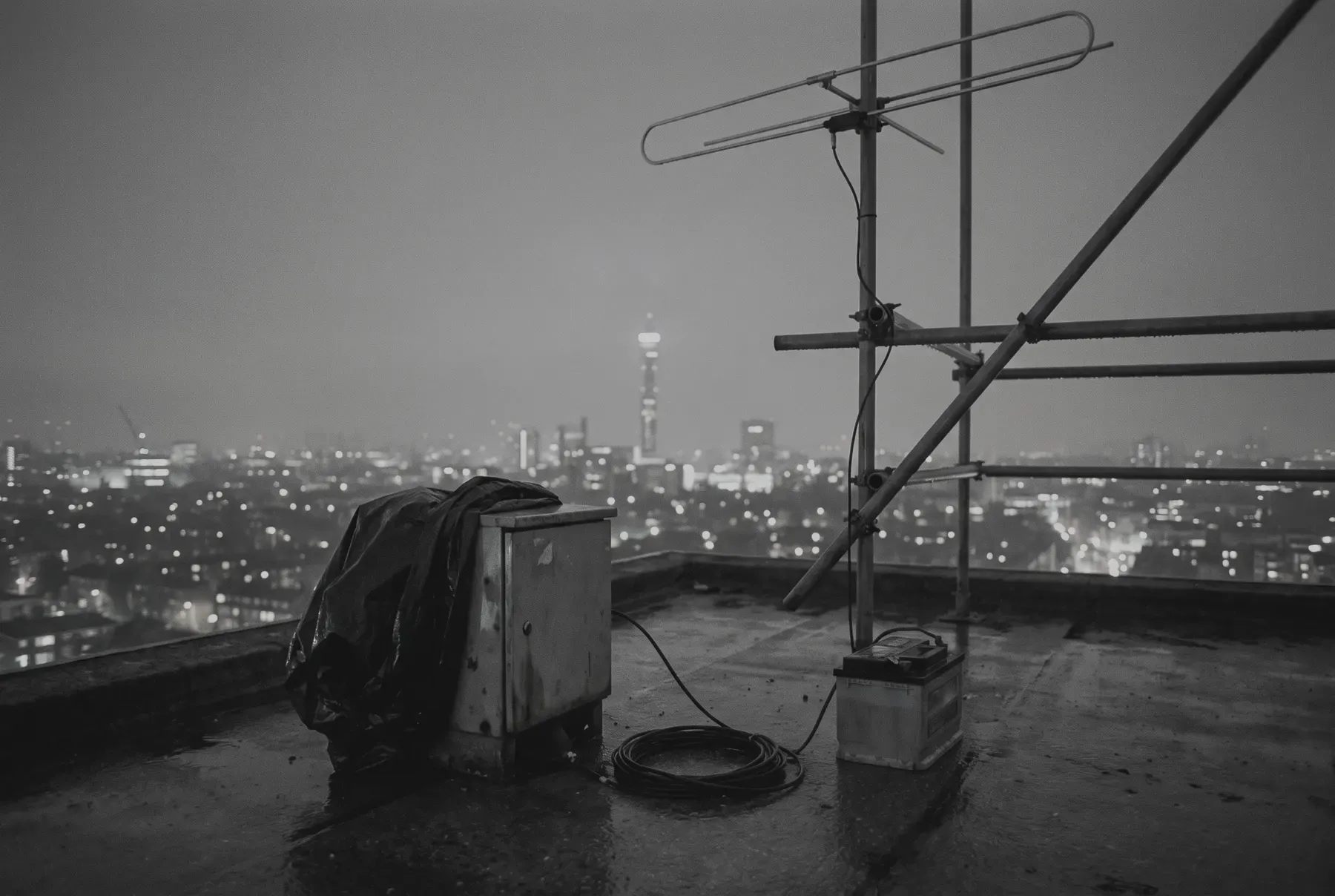
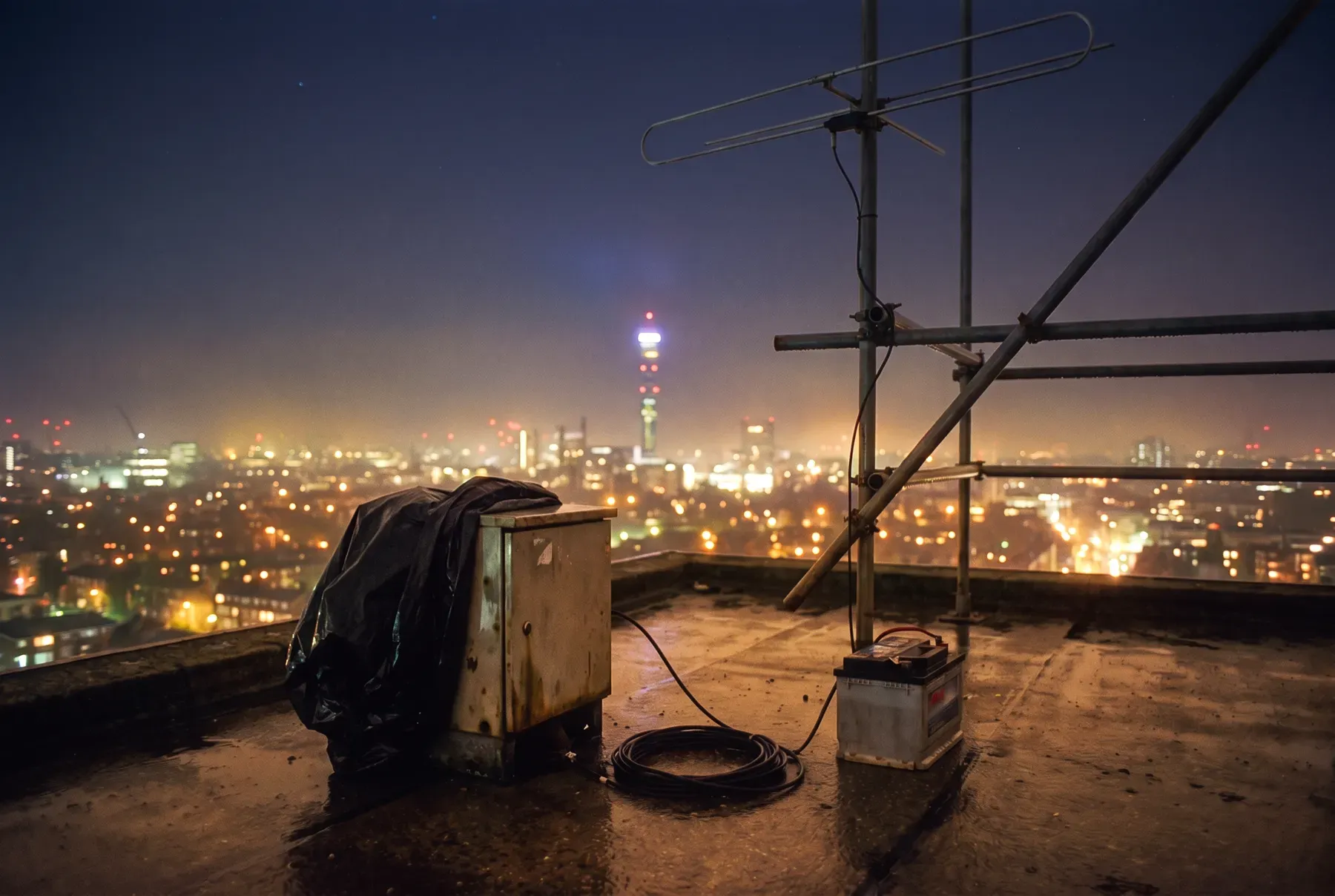
A home-made FM transmitter under a bin bag on a tower-block roof, London lit up below
On the news: Unlicensed transmitter. Liable to seizure.“If you can hear this then you're one of us”Test Transmission · Test Card
03 · The pirates

Why "tower block radio"?

In the 1980s the BBC and London's licensed commercial stations played almost none of the music Black London actually danced to. So London built its own radio. Pirate stations - unlicensed, homemade, run by DJs and engineers in their spare time - filled the FM dial with reggae, lovers rock, soul, funk and later house.

The Dread Broadcasting Corporation broadcast reggae and soul to West London from a mast in a back garden. Radio Invicta had been playing soul since 1970; JFM, Horizon and Solar followed; LWR launched on New Year's Day 1983; Kiss FM went on air in October 1985 and later became a licensed station.

The higher your aerial, the further your signal travelled - so the pirates went up. A transmitter could be carried up a tower block's stairwell, the aerial lashed to the lift housing on the roof, the studio a bedroom somewhere below. From the top of a twenty-storey block a small transmitter could cover a whole side of London. When the Telecommunications Act 1984 gave officials the power to raid and seize, stations learned to broadcast from one place and transmit from another.

London Tower Block Radio is named for those rooftops. We don't need to hide an aerial any more - the signal comes down a wire to your phone, your laptop or our Receiver app - but the idea is the same: a station that plays what the people in the block actually want to hear, run with conviction rather than committee.

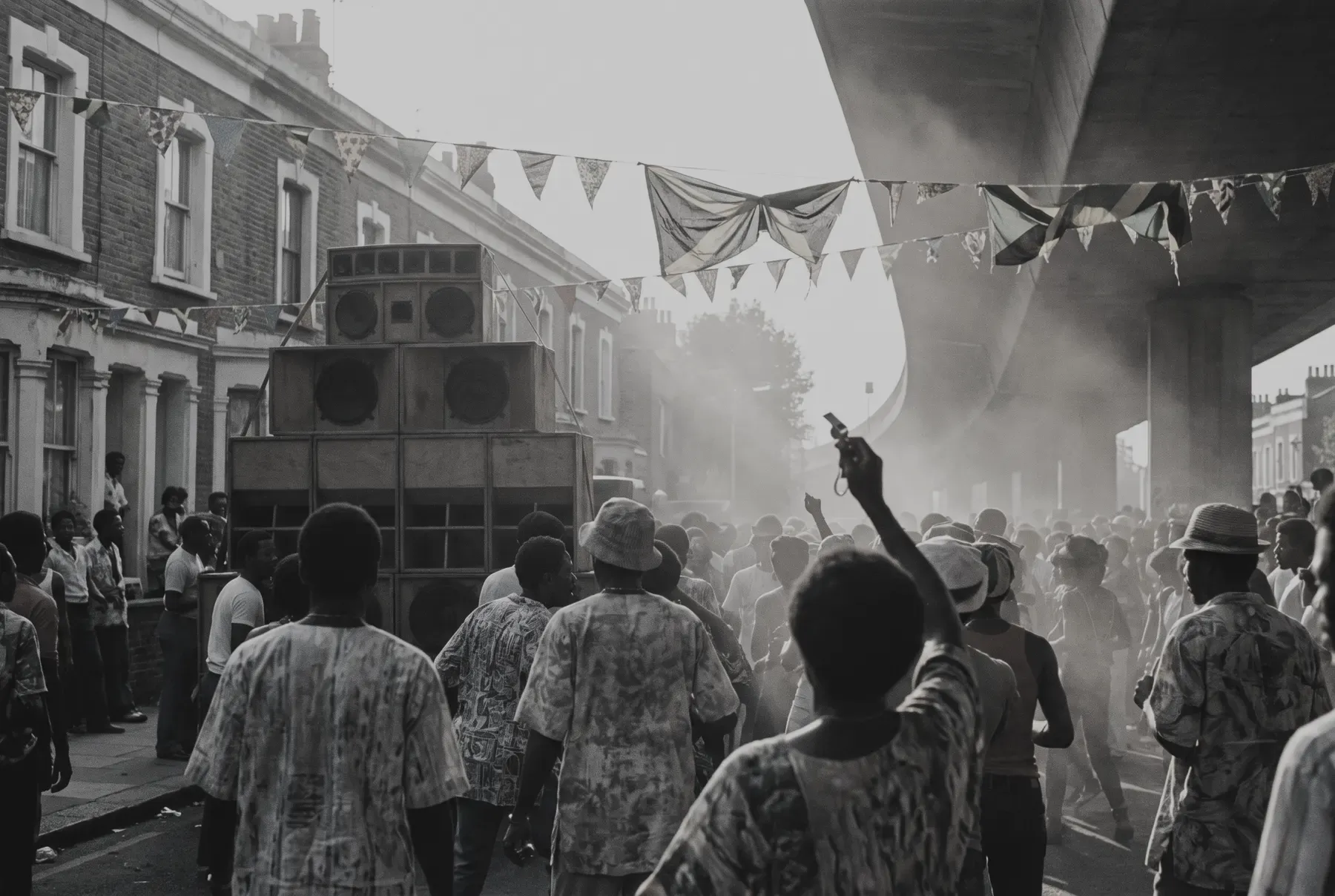
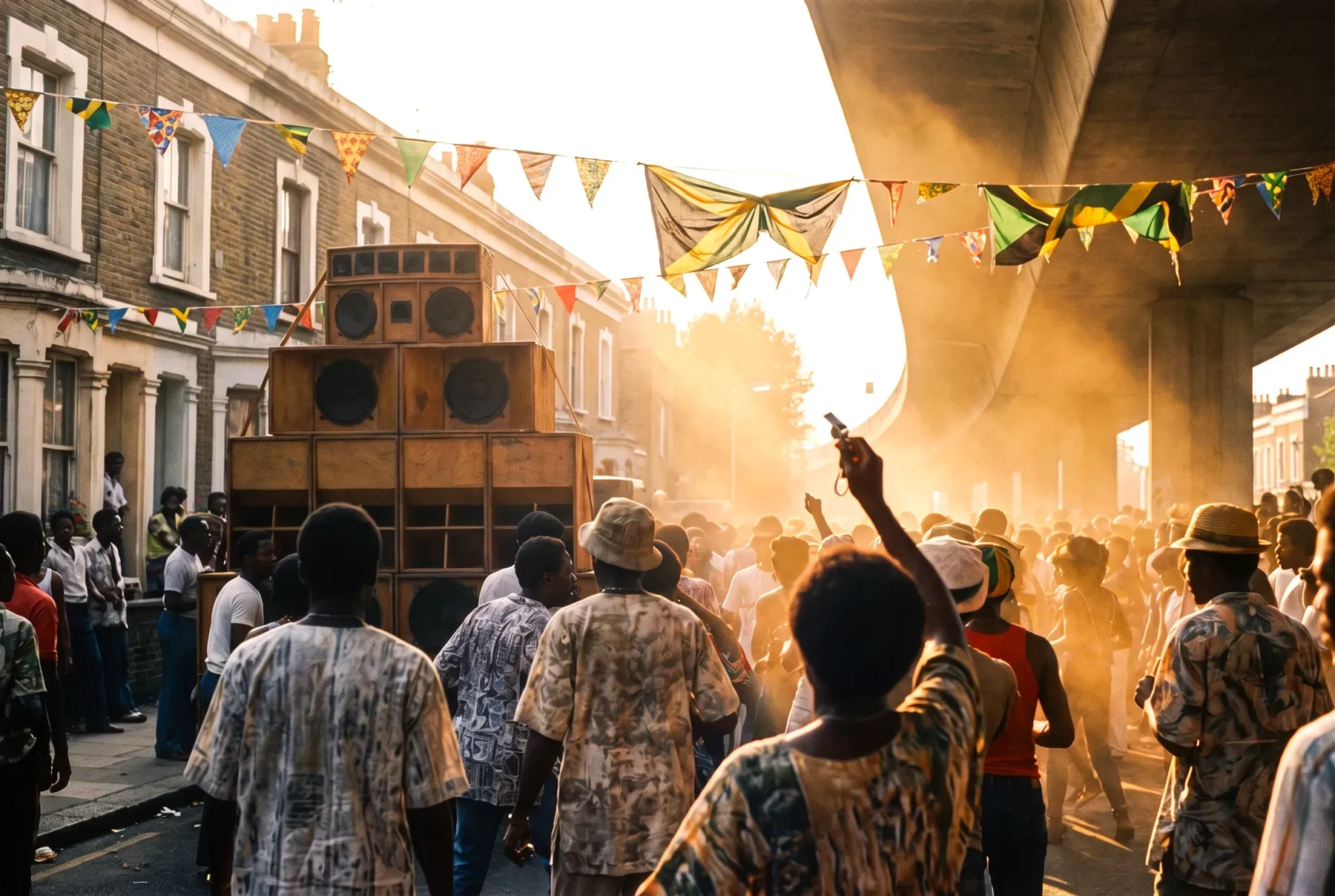
A static sound system under the Westway at Notting Hill Carnival, a crowd dancing in the summer haze
On the news: August bank holiday. Police leave cancelled.“Some streets carry stories / Some streets carry songs”All Saints Road · Cherry Wilson
04 · The street

Carnival, the market and the bus

Notting Hill Carnival grew out of the West Indian community in North Kensington in the 1960s, and in the mid-1970s it gained the thing that made it London's own: static sound systems, stacked on the pavements of Ladbroke Grove, All Saints Road and Westbourne Park Road. For one weekend every August the streets under the Westway belonged to the people who lived there, and you could walk from one sound to the next all day.

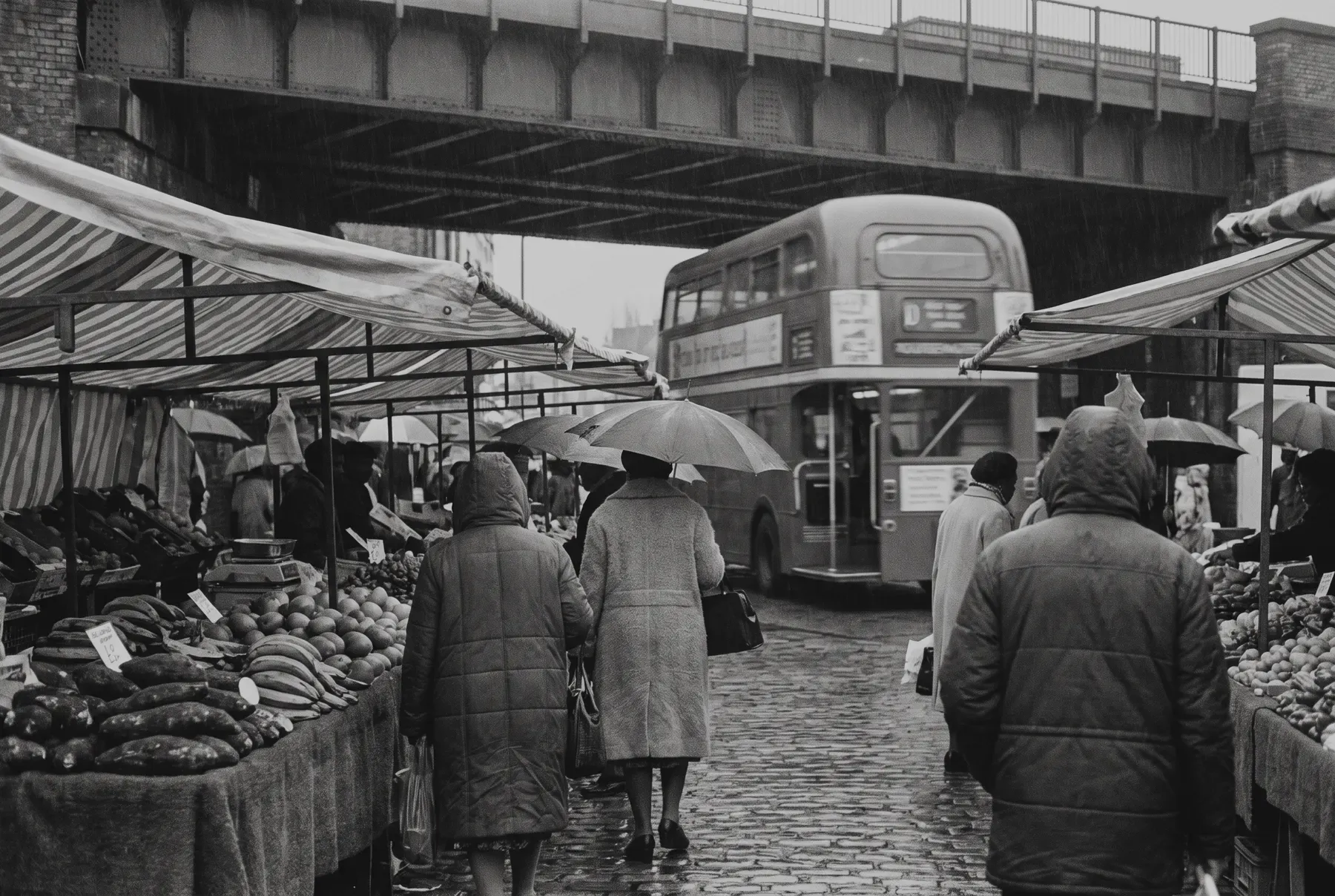
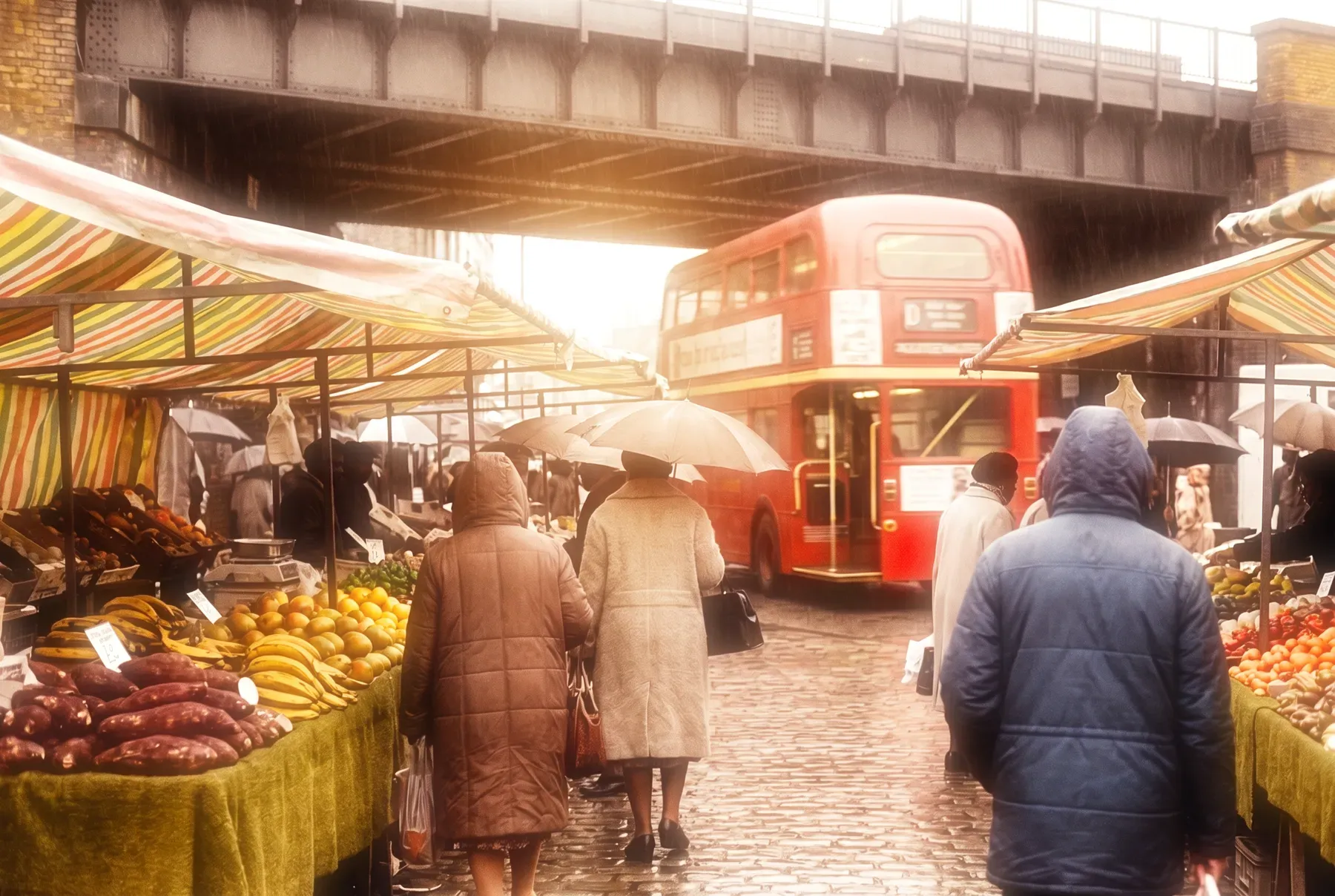
The rest of the year, London's Caribbean life happened in the open: in Brixton Market and on Electric Avenue, on Ridley Road in Dalston, on Rye Lane in Peckham, in the record shops - Dub Vendor in Clapham Junction, the counters at the back of barbers' shops - where you heard the new pre-release before anyone else. Saturday meant the market, the record shop and the youth club, in that order.

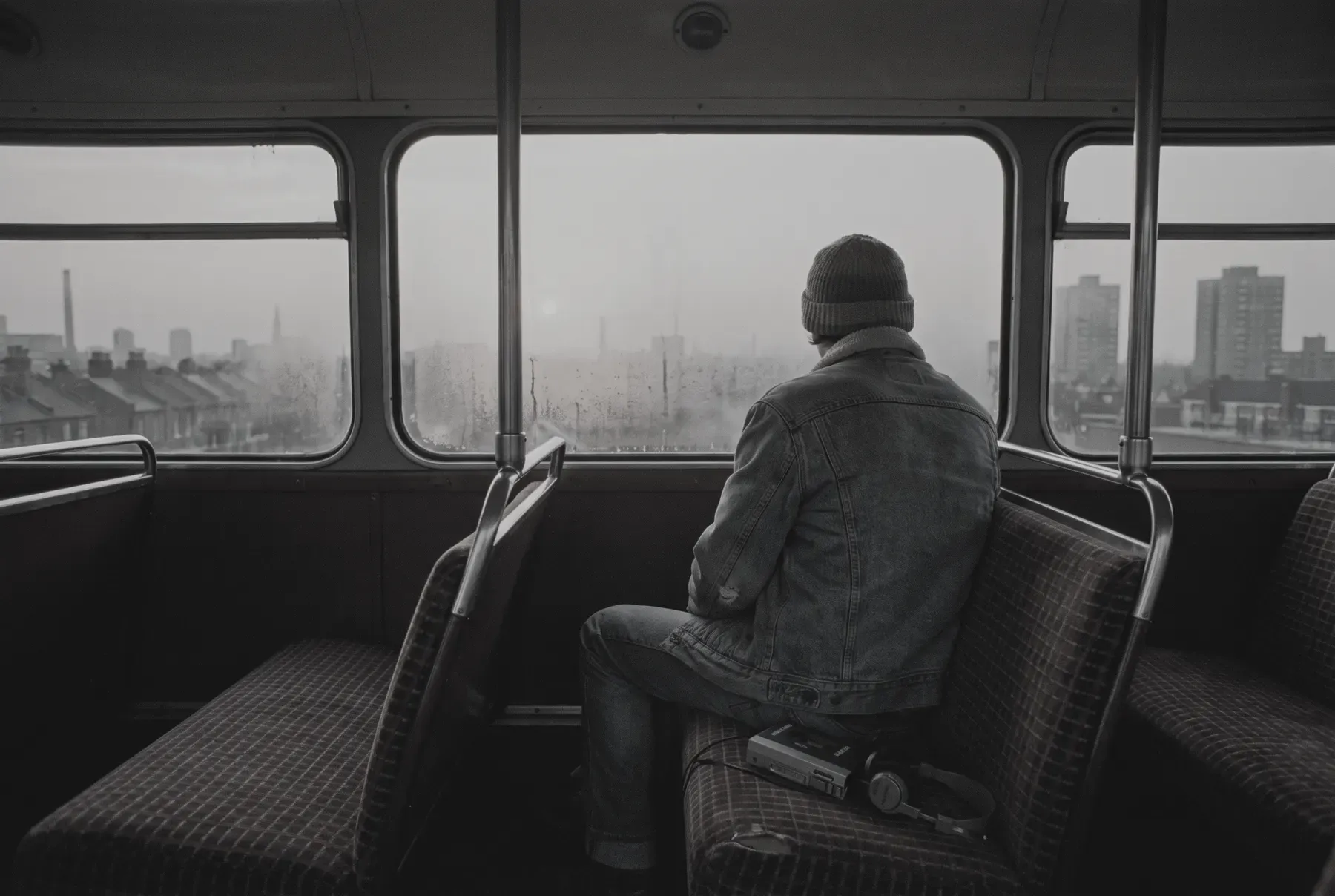
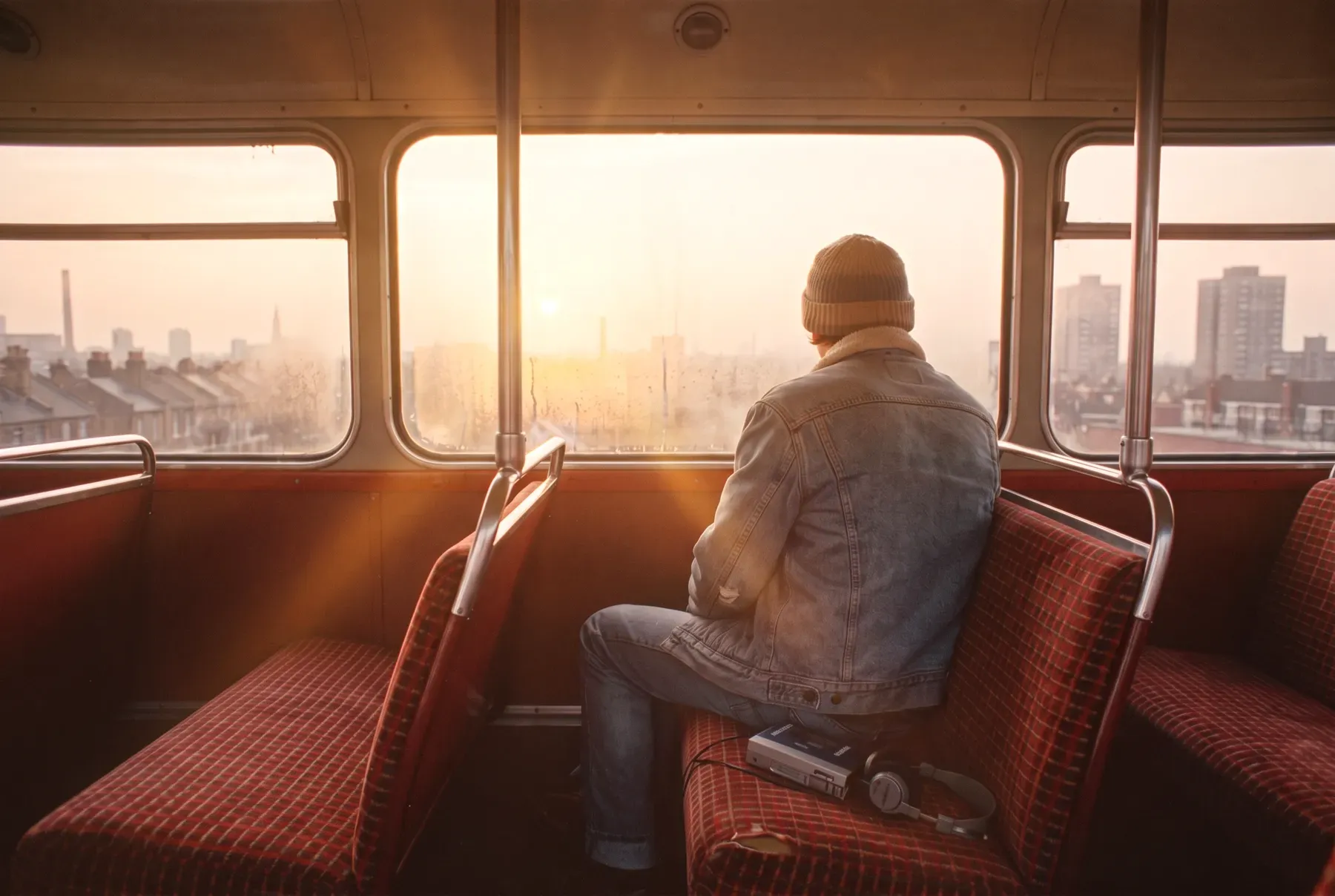
And everywhere, the bus. The 36, the 159, the 18, the night bus home with a Walkman on the top deck. If the 1980s London of our songs has a single place, it's a red double-decker crossing the river at dawn.

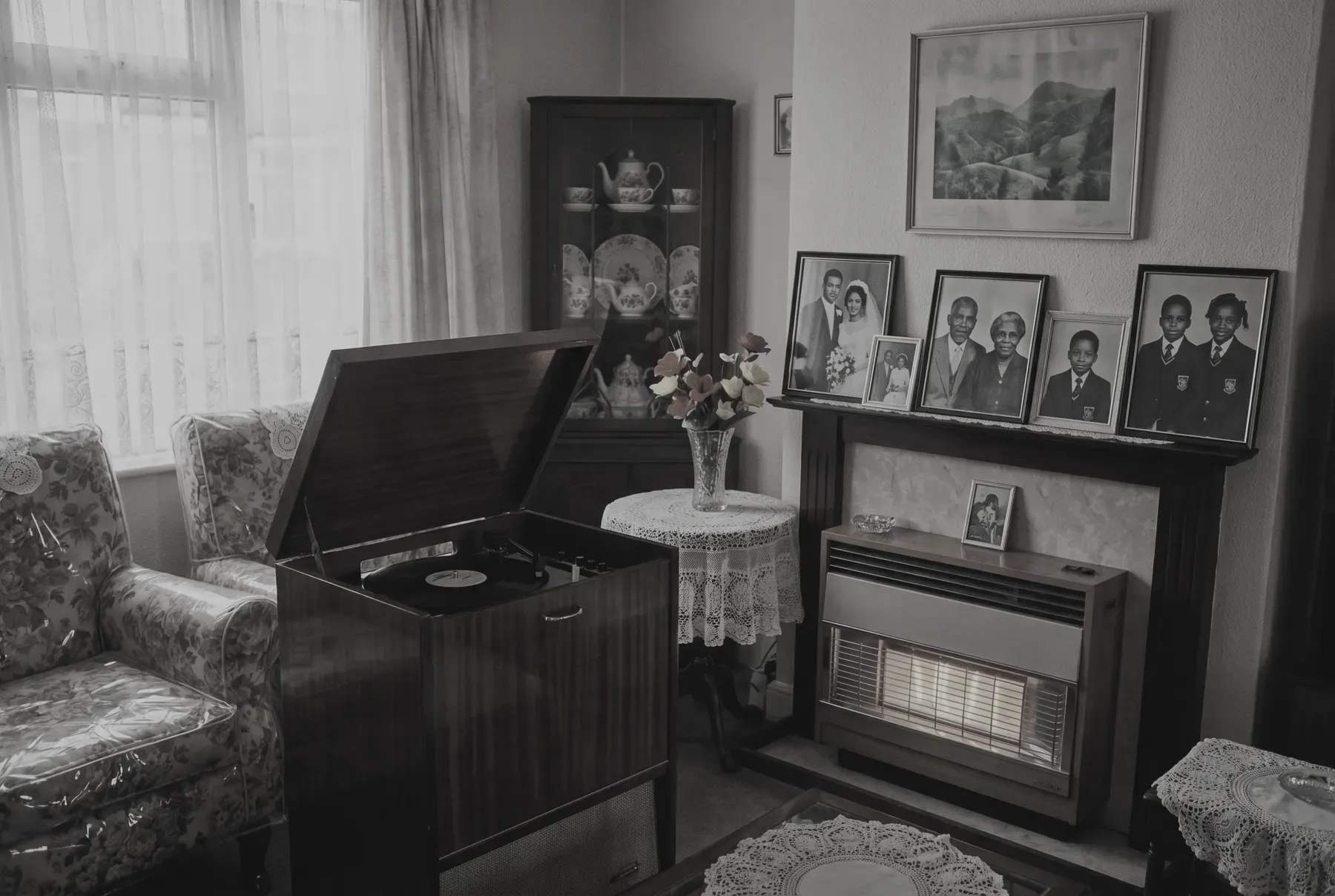
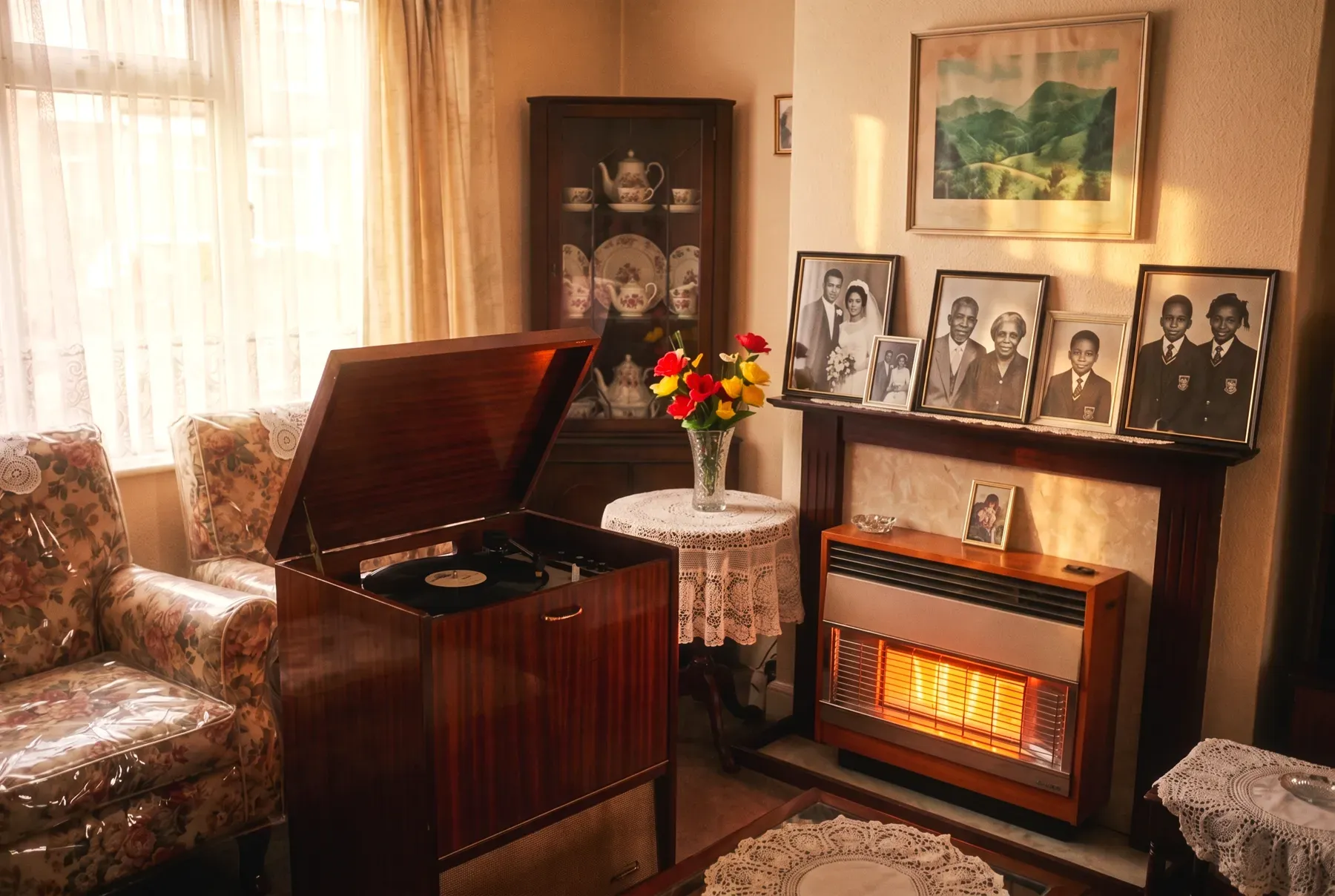
A Caribbean family's front room in London: a radiogram, family portraits, a picture of Jamaican hills above the gas fire
On the news: Meter's on the ten-pence. Rent book on the side.“Where the past keeps the present warm”Front Room · Southside Hustle
05 · The front room

The front room, the radiogram and Sunday

For the families who came from the Caribbean after the war, the front room was the best room in the house: kept for visitors and Sundays, with the good china in the glass cabinet, family photographs on the mantelpiece, a picture of home on the wall and, in pride of place, the radiogram - a radio and record player built into a polished wooden cabinet, often bought on hire purchase and paid off for years.

That radiogram played the records that held a family to two places at once: ska and calypso, gospel on Sunday morning, Jim Reeves for Grandad, and later the reggae and lovers rock the children brought home. The second generation grew up between the radiogram and the sound system, and British reggae is what happened when they met.

It's the room our station imagines it's broadcasting into. Rice and peas on the stove, the kettle on, the meter fed, and the radio up loud enough to drown out whatever the news was saying.

What we broadcast

Not nostalgia for the hard times. The memory of what got people through them.

We are not pretending the 1980s were a golden age. For a lot of London they were brutal, and the people who lived through them deserve better than a soft-focus advert. That's why the ledger above is there, with its sources.

But memory does something the news can't. It keeps what mattered. Ask someone who grew up on an estate in Peckham or Tottenham in 1983 what they remember, and it's the party, the tune, the friend, the bus, the smell of Sunday dinner, the pirate station that played their song. That is the London we broadcast. Hard times, head up.

So everything on LTBR.FM leans warm. Our acts sing about lifts on strike and gas meters on the ten-pence - and about the dance that made the week worth it. Our presenters talk like the night is long and everyone listening is on the same floor. Our running order is built hour by hour, programme by programme, from the small hours to The Later Hours, like a station with a block full of listeners.

  1. 01We play the London you'd miss, not the London you'd dread.
  2. 02We name the hard history honestly, and we never borrow real people's pain for our stories.
  3. 03We broadcast for free, 24 hours a day, to anyone who tunes in.
  4. 04We keep the pirates' rule: play what the people want, with conviction rather than committee.
The top deck of a London bus at sunrise, a passenger with a Walkman looking out over the tower blocks
On the news: Night bus home. First light over the estates.“We made it through the longest night”First Light · Cassie Linton
A South London street market in the rain under a railway bridge, a red Routemaster passing
On the news: Rain. Prices up. The 159 running late.“Nothing much happen, everything happen”36 Bus · Fordham Park
The London in our songs

Every act on the station comes from somewhere.

Our featured acts are 1980s artists we imagined - but their streets are real. Brixton and Railton Road, Ladbroke Grove and the Westway, Tottenham High Road, Rye Lane, the Thamesmead walkways. Pick a neighbourhood to meet who sings for it.

THE THAMESSOUTHALLHARLESDENKILBURNLADBROKE GROVEFINSBURY PARKTOTTENHAMDALSTONFOREST GATEPOPLARWALWORTHCAMBERWELLPECKHAMNEW CROSSSTOCKWELLBRIXTONCLAPHAMTOOTINGSTREATHAMGIPSY HILLCATFORDWOOLWICHTHAMESMEAD
Hard times, head up

What our songs remember

  • “Skint's just a season, it don't define”

  • “Outside the world is cold, in here we hold”

  • “This is the London that the news don't see”

  • “Nobody asking where you're from”

    One Big Manor · The Walworth Road
  • “Whatever they took, they can't take pride”

  • “The bass in my speakers is the boat that he rowed”

  • “Washing all my worries to the sea”

  • “Every knock-back built a brick”

  • “Front room cleared and the bass bin's in”

  • “What we built we carry, what we lost we hold”

  • “Strong like the iron, soft like the gold”

Sleeve notes

How this station is made

LTBR.FM is an imagined station, made in 2026, about a London that was real. Our featured acts are 1980s artists we imagined. Our presenters are today's Londoners, also characters we created. The streets, buses, markets and weather of both are real. Every song is written for the station - lyrics by us, recorded with AI music tools - and every one of them is ours, which is why the stream is free and safe to play anywhere. The full detail is in our Rights & Licensing Statement.

None of it would mean anything without the people who did this for real, with no money, no licence and a lot of nerve. We owe them the sound, and we name them here as inspiration - not as partners. None of them is connected to this station.

Read the Rights & Licensing Statement

Standing on the shoulders of

  • Dread Broadcasting CorporationWest London's reggae pirate, 1404 MW
  • Jah Shakathe Zulu Warrior sound, South-East London
  • Sir Coxsone Outernationalsound system since the 1960s
  • Saxon Studio InternationalLewisham, fast-chat MCs
  • Fatman Hi-FiTottenham sound system
  • Dennis Bovellproducer, Matumbi, lovers rock architect
  • Janet Kay'Silly Games', 1979
  • Carroll Thompson'Hopelessly in Love', 1981
  • Linton Kwesi Johnsondub poet, Brixton
  • Kiss FMpirate from 1985

Turn it up.

That's all the 1980s ever asked of a radio. We're on air now.