LTBR.FM
Not on air. Behind the rig.

The Engineer

Every station is two rooms. There's the studio, where the voices live. And there's the other room — the one that smells of solder and warm dust, where somebody keeps the whole thing standing.

This page is about the other room. Six services carry LTBR.FM — the director that plans the day, the player that performs it, the transmitter that carries it, the website you're reading, the receiver on your desk and the wire that binds them — and every one of them was built by the same pair of hands. For the love of live radio. Given away free.

Six servicesOne pair of handsEverything freeAlways on
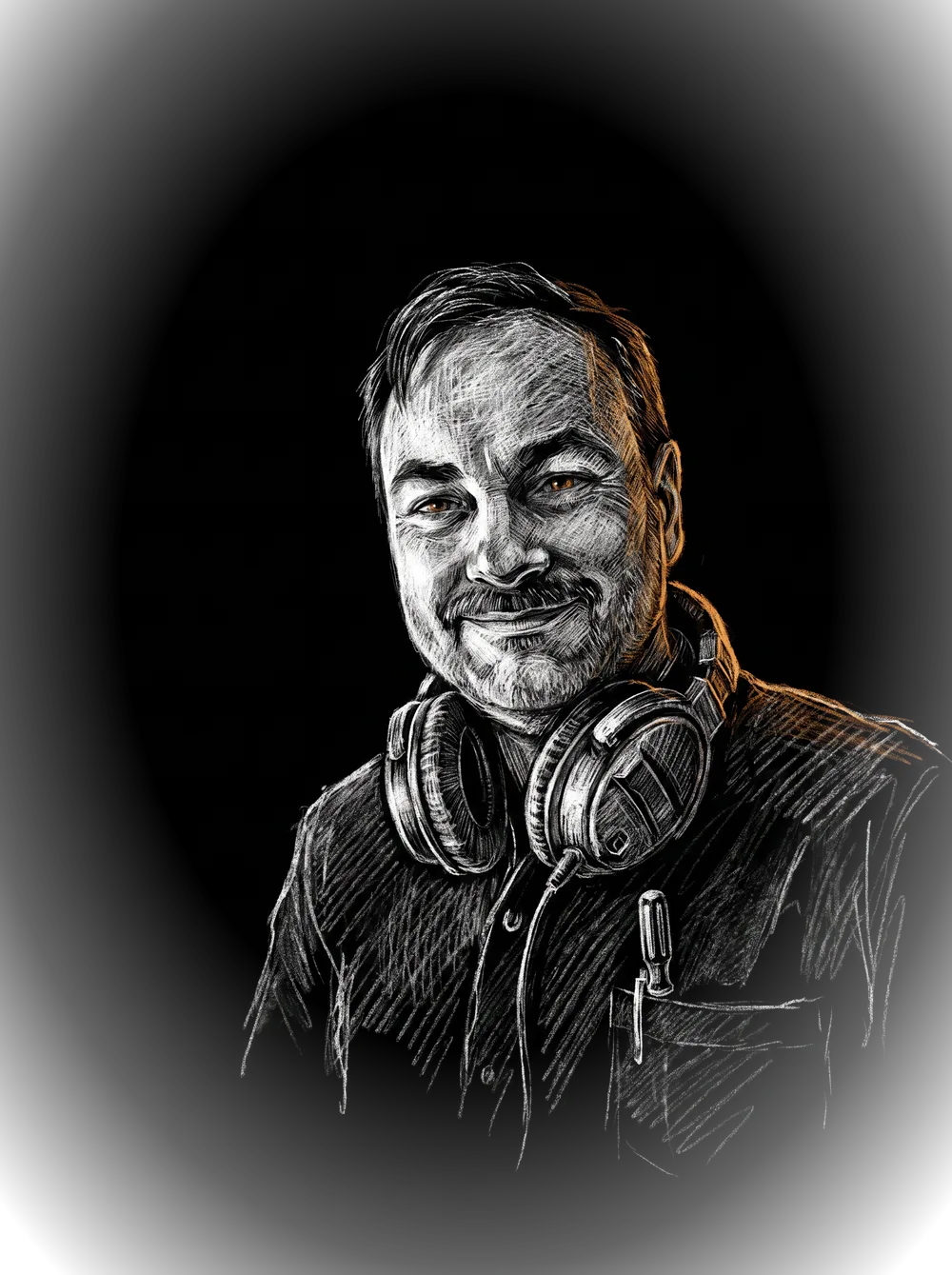
The Station Engineer — chalk portrait, broadcast headphones around his neck
Where this comes from

He's done this before. The real way.

Before LTBR there was an independent radio station, and the Engineer was inside it — close enough to the desk to hear what the compressor was hiding, close enough to the transmitter room to know where the fuses were. Real radio, made by people who stayed long after their shift ended. That never washes off.

Years later the tools changed. Streams instead of masts, services instead of studios — everything technology now offers to anyone willing to learn it. And with the new tools came the old itch, sharpened into a question: could one person build the whole station? Not a playlist on shuffle — a station, with a running order, voices, dead-air discipline and a proper log.

The answer is the thing you're listening to. And one rule shaped every part of it: all of it free, for everyone — no accounts, no ads, no permission required. The same signal that once pulled him into a transmitter room, offered onward to whoever tunes past it.

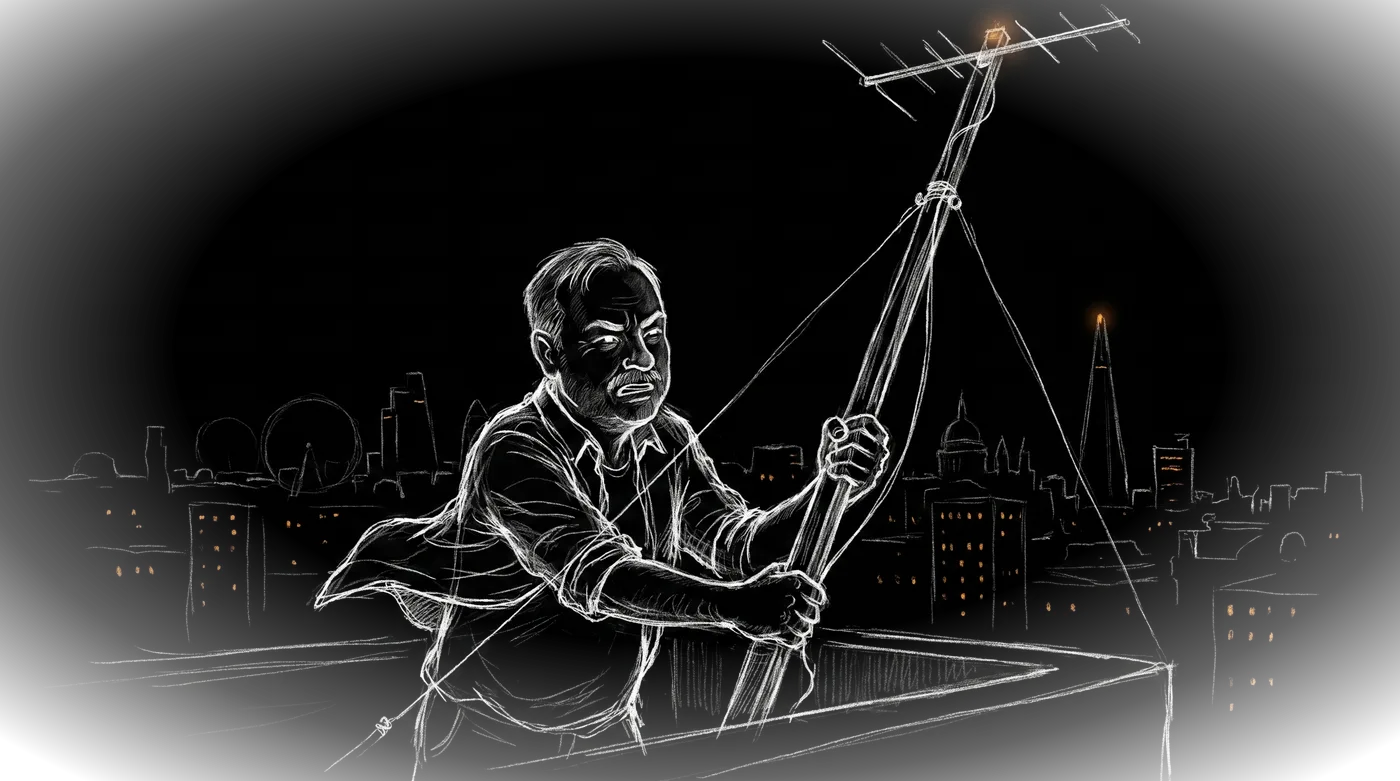
Chalk sketch of the engineer raising a homemade FM mast on a tower block roof, London skyline behind
The Rig

Follow the signal.

Every stage below is a real service, running right now, built by the Engineer. Scroll, and the signal walks the chain the way it does all day, every day — from the planning room to your speakers.

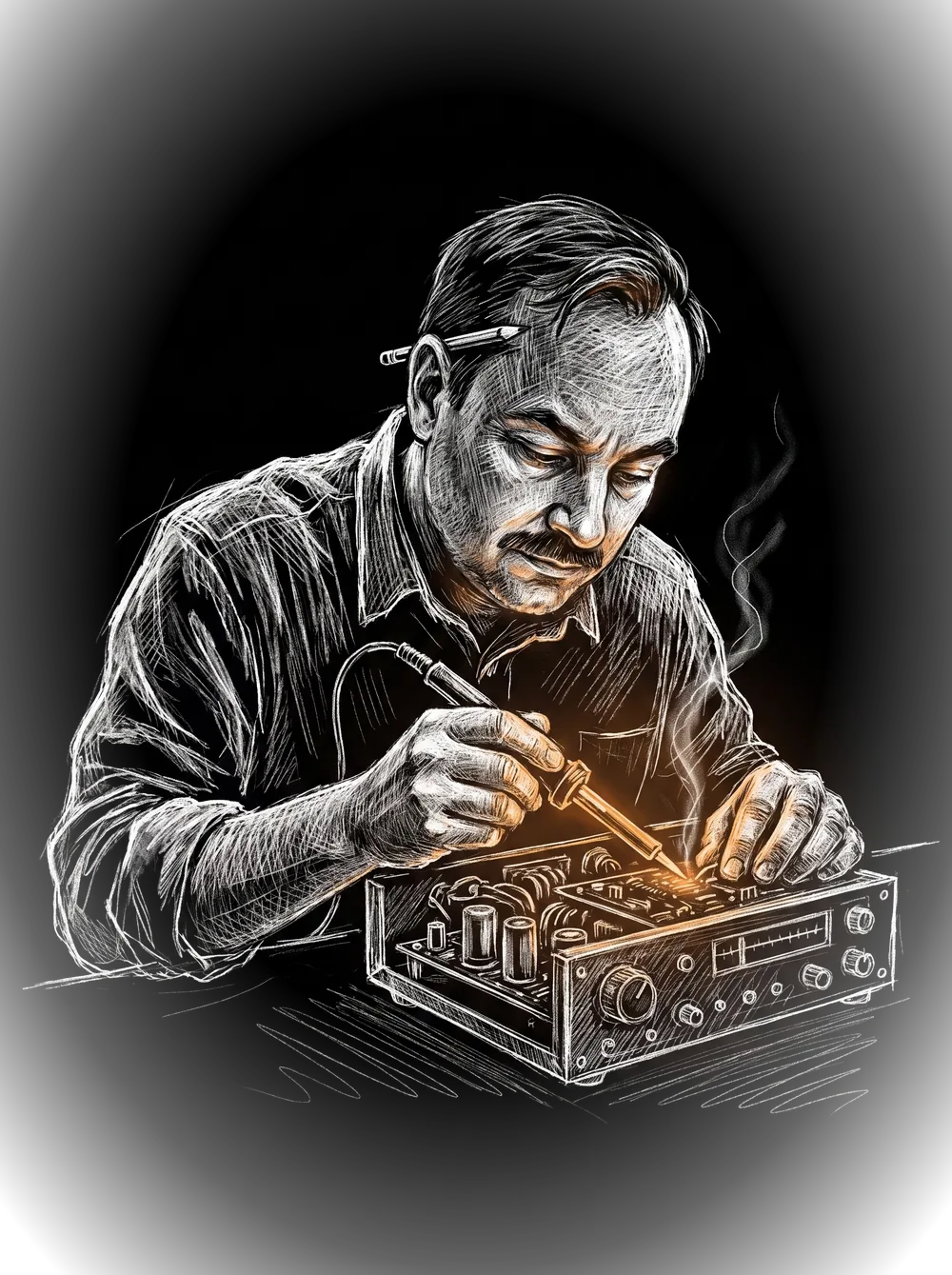
  1. Chalk sketch of the engineer soldering an open transmitter chassis, the iron tip glowing amber
    Stage 01

    The Director

    The room where tomorrow's radio is decided.

    A control plane that plans the week, assigns the voices, writes each day's subjects overnight and keeps the station's books. Nothing on air is an accident: every hour was decided, dated and filed before it happened.

    And when anything changes, it doesn't wait to be asked — it pushes the new sheet down the wire to every surface the station has, the moment the ink is dry.

    Plans the weekWrites the overnight sheetPushes by wire
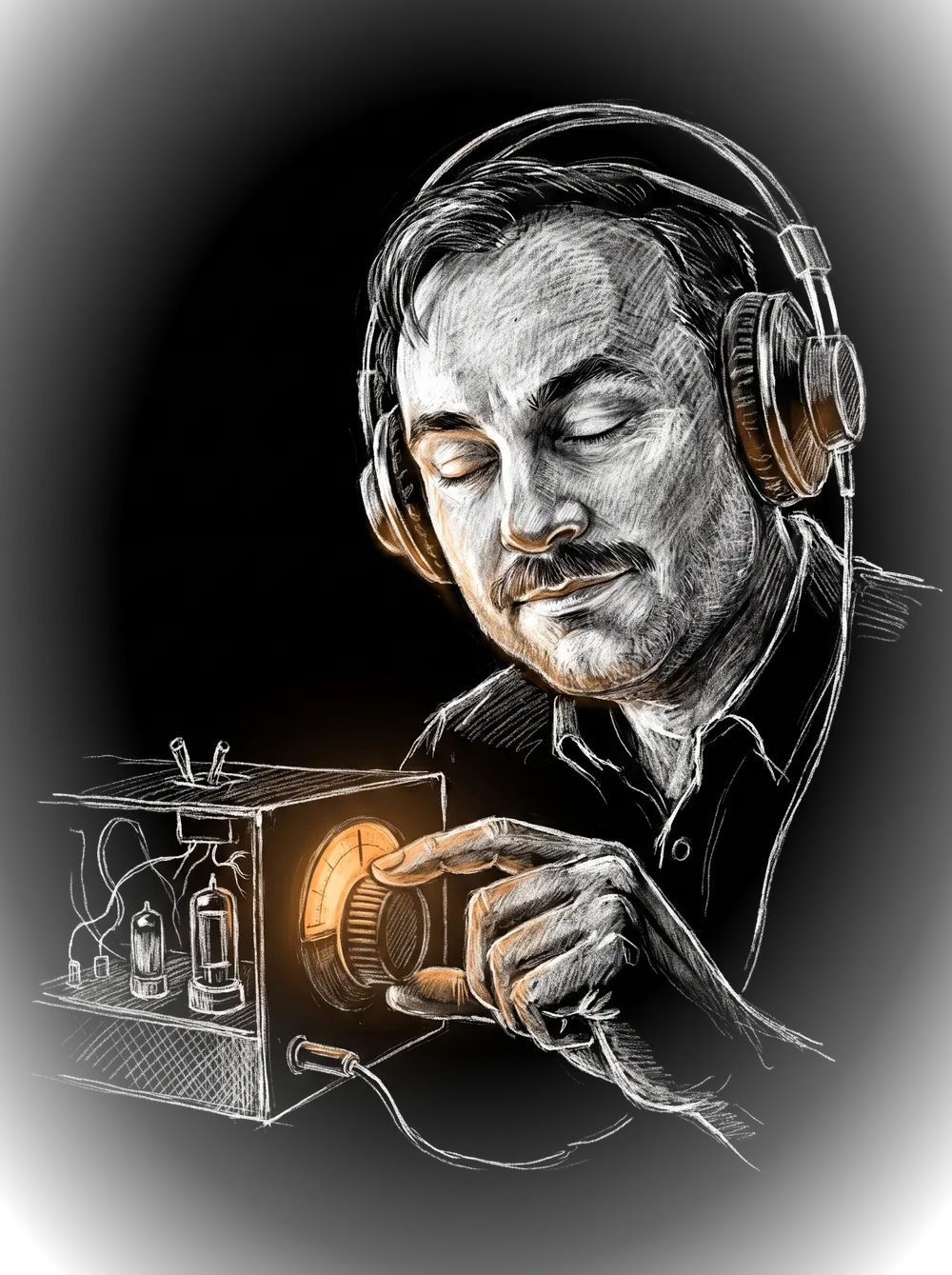
  2. Chalk sketch of the engineer listening through headphones, hand on a tuning knob, dial lamp glowing amber
    Stage 02

    The Player

    The deck that never sleeps.

    The broadcast engine. It runs the running order, mixes the records, brings the DJs to the mic and rides the levels through the night — then does the whole day again without being told.

    As it plays, it publishes every beat of the broadcast — tracks, jingles, talk — so that every listener's timeline moves exactly with the transmitter's.

    On air 24/7Live timelineEvery beat published
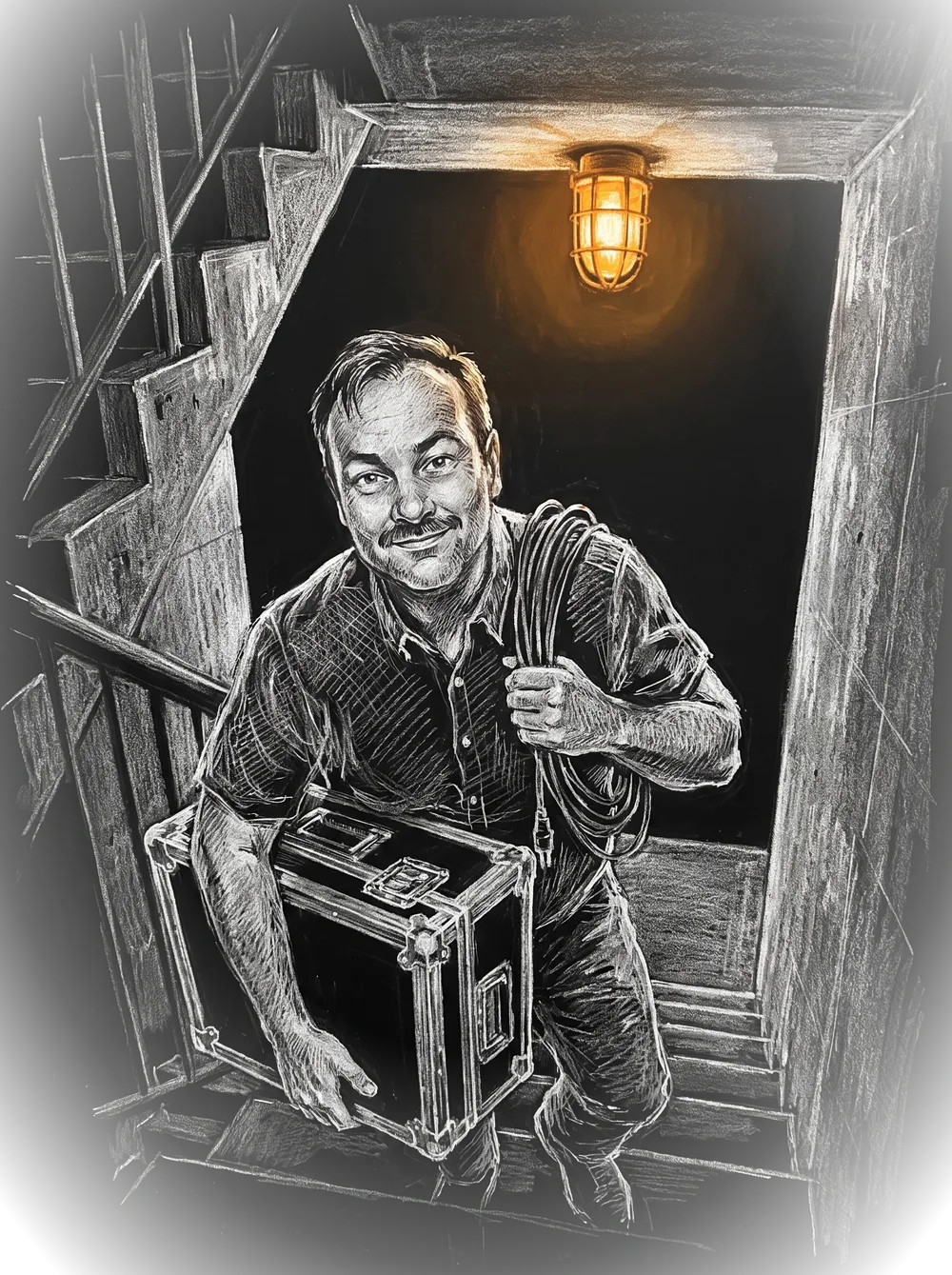
  3. Chalk sketch of the engineer carrying a transmitter flight case up a tower-block stairwell under an amber lamp
    Stage 03

    The Transmitter

    The signal with a spare signal.

    An Icecast stream carries the station. A YouTube feed stands silently behind it. When the main carrier stumbles, playback slips to the fallback mid-song — no button, no gap — and keeps probing home in the background.

    The instant the stream heals, it rejoins the live edge. Dead air is the one thing this station refuses to broadcast.

    Icecast primaryYouTube standbySelf-healing
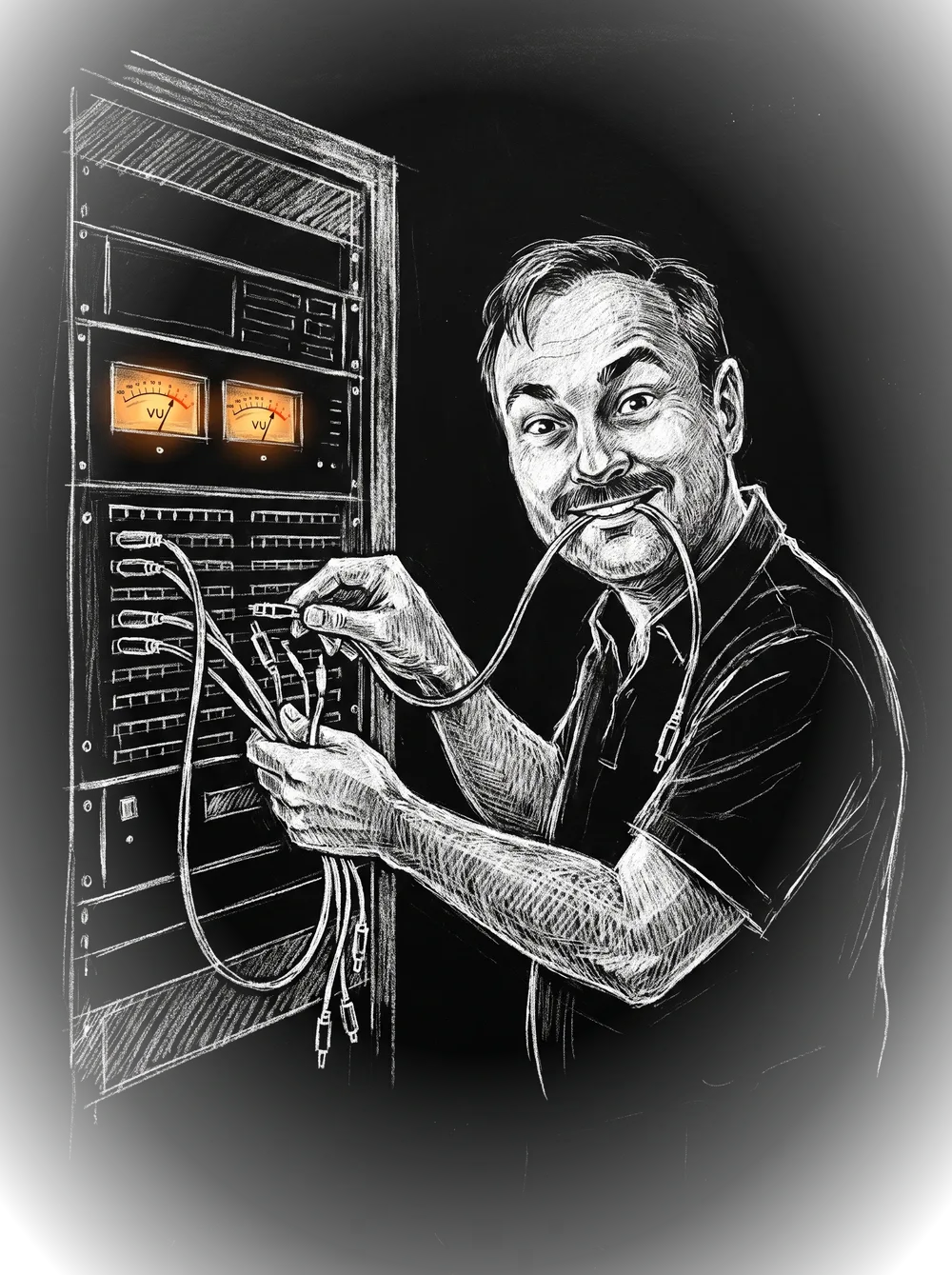
  4. Chalk sketch of the engineer patching cables into a rack, one cable held in his teeth, VU meters glowing amber
    Stage 04

    The Front Door

    The whole desk, one URL.

    The website you're reading: a timeline that scrolls with the broadcast, an on-air lamp that means it, lyrics that come up with the song, the day's programme sheet — and the stream one press away.

    Underneath it, one engineering rule outranks everything: pages may change, the music does not stop. Install it to a home screen and the station rides in your pocket.

    Live timelineMusic outranks navigationInstalls as an app
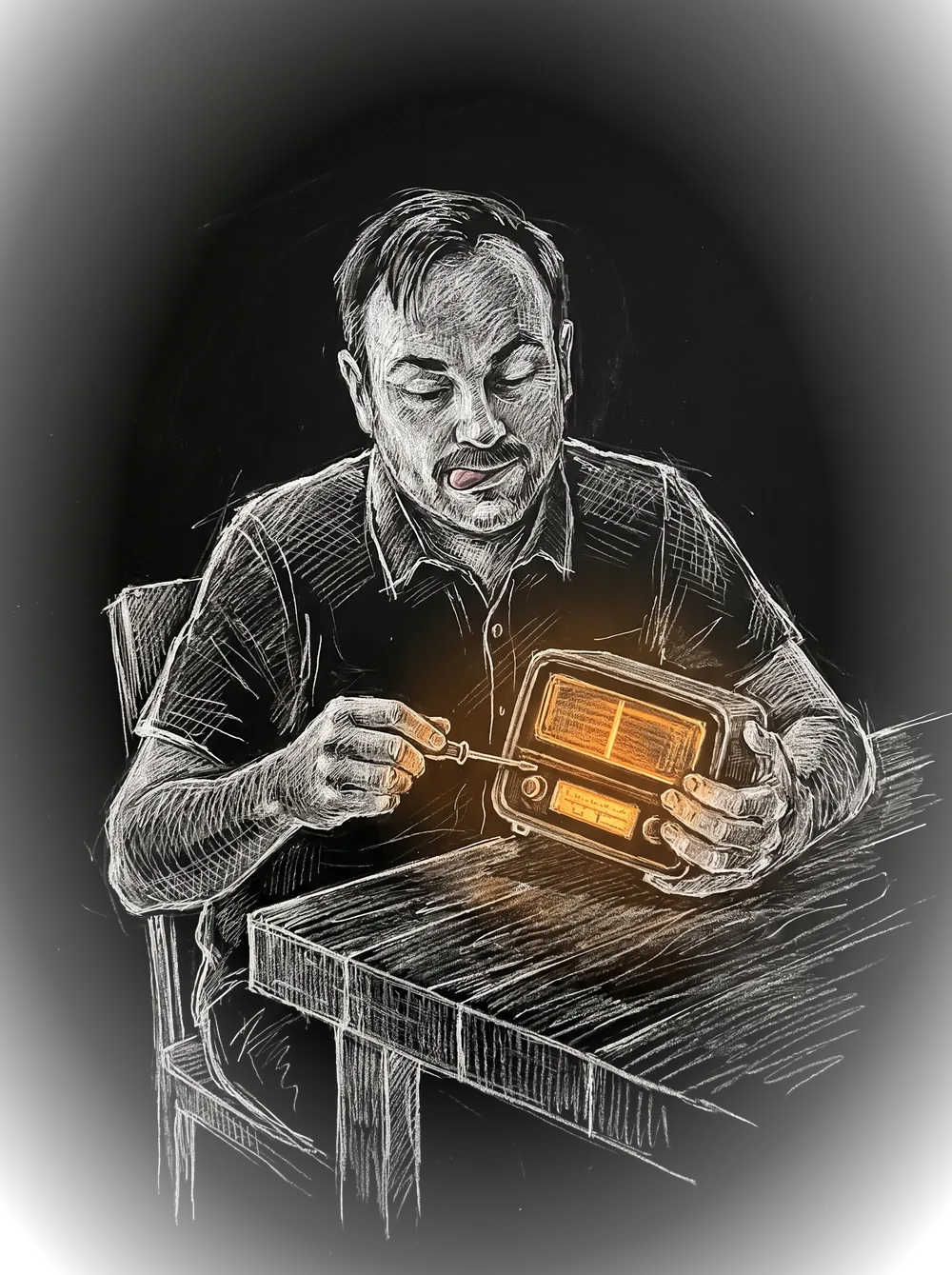
  5. Chalk sketch of the engineer assembling a small desktop radio, its display window glowing amber
    Stage 05

    The Receiver

    Hardware, of a kind.

    A little desktop radio for Windows, Mac and Linux — amber dot-matrix display, a spectrum analyser that dances along, twelve sliders of proper EQ and a standby lamp that goes out as London comes in.

    It updates itself quietly the day a new build ships, and never asks you for anything. It's just a radio.

    Win · Mac · LinuxSelf-updatingFree
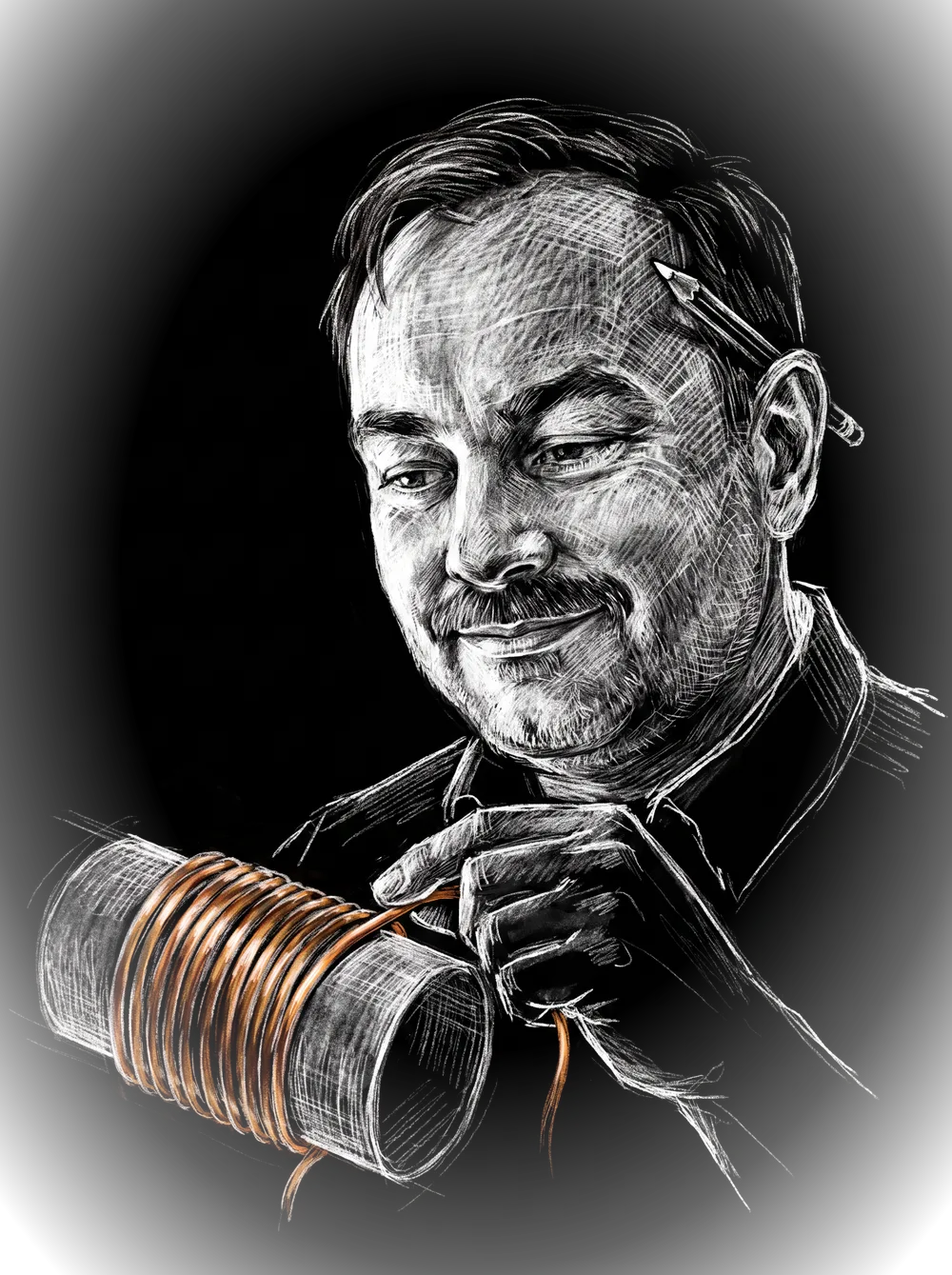
  6. Chalk sketch of the engineer winding a copper coil, the wire glinting amber between his fingers
    Stage 06

    The Wire

    Everything by push. Nothing by polling.

    The nervous system. Every service tells the others what changed the moment it changes — programme sheets, subjects, lyrics, releases — so no part of the station ever shows yesterday's truth.

    The studio itself isn't even reachable from the internet. It speaks first, always, down a wire only it can open. The pirates would have approved.

    Push onlyAtomic writesAlways current
Stage 07 · signal delivered

You

The chain ends in your room. Press play — that's the whole ceremony.

Bench notes

From the wall above the workbench.

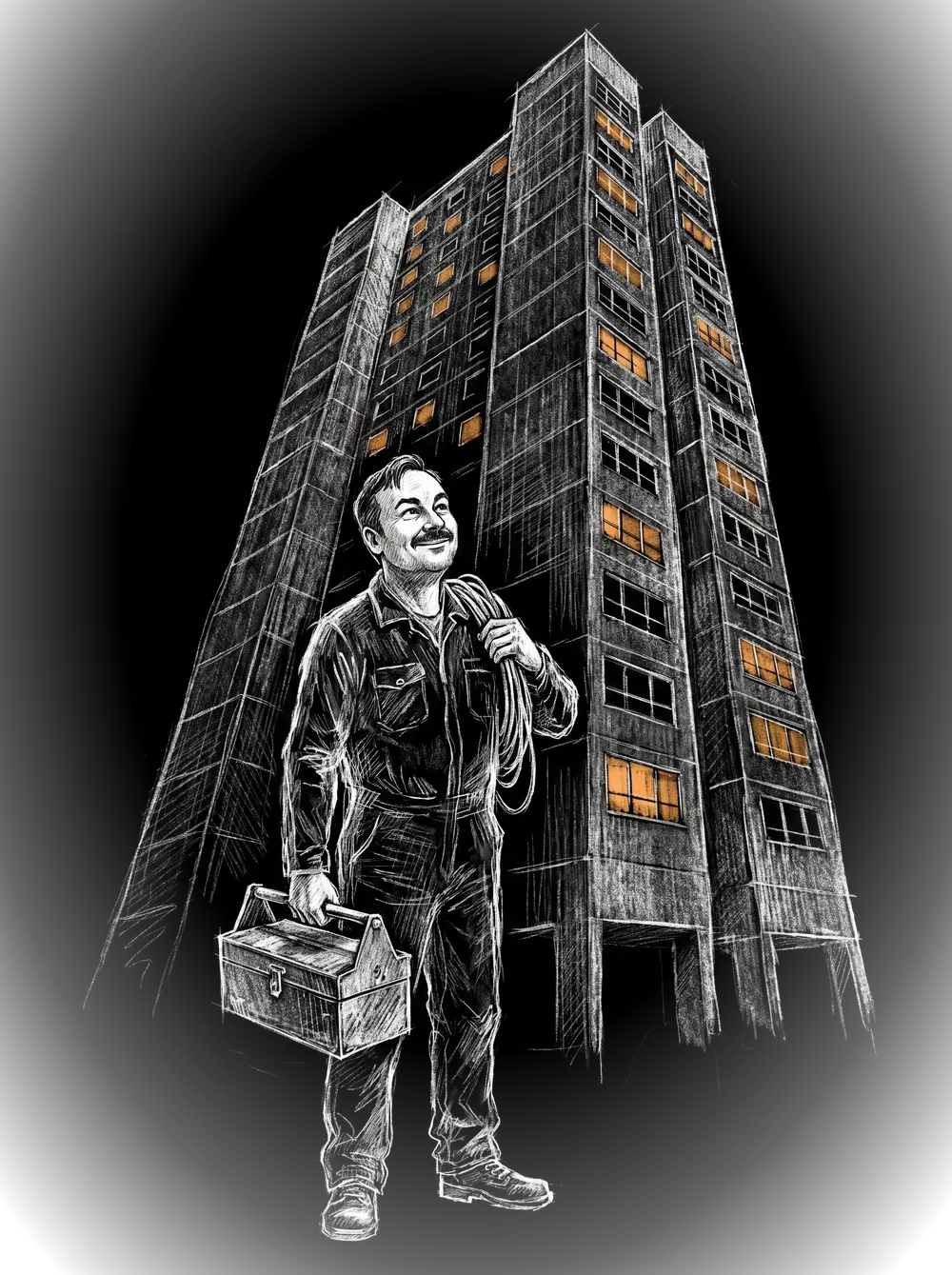
Chalk sketch of the engineer at the foot of a tower block at dusk, toolbox in hand, amber windows above
Site survey. The roof said yes.
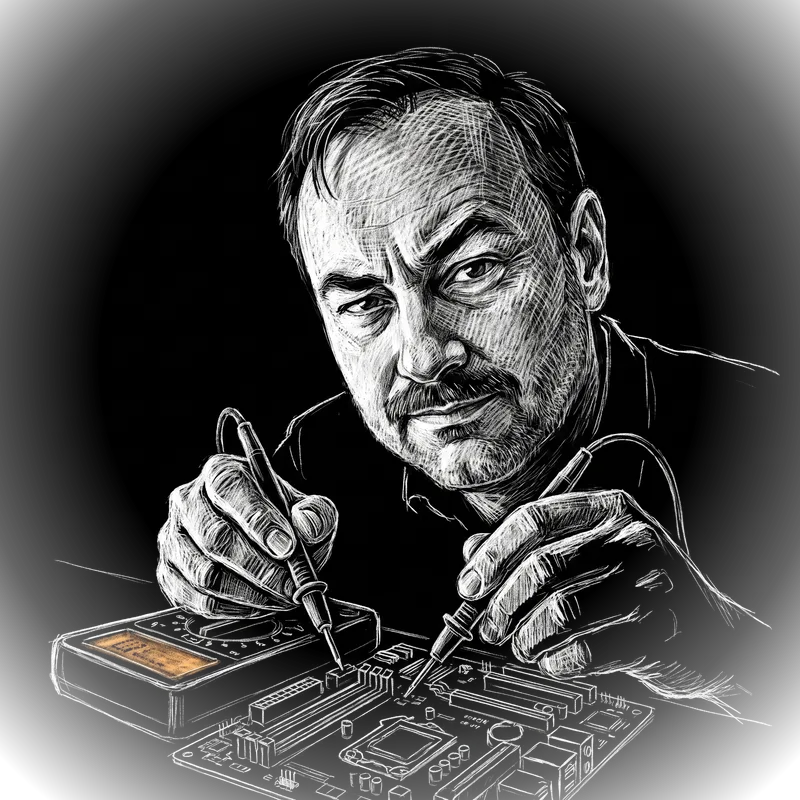
Chalk sketch of the engineer testing a circuit board with multimeter probes, the meter glowing amber
Continuity: confirmed. Twice.
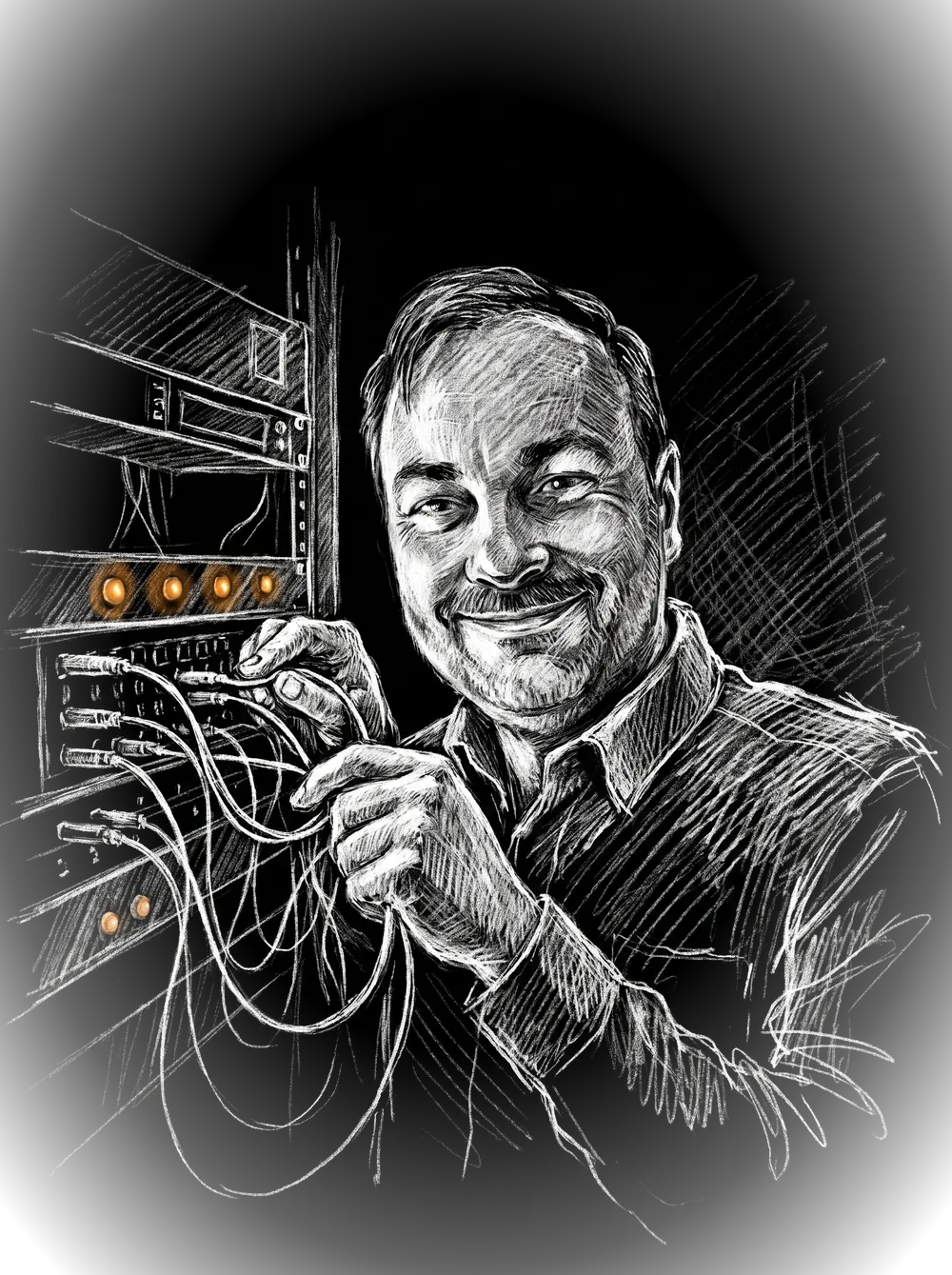
Chalk sketch of the engineer grinning at a handful of patch cables in front of an equipment rack
Every cable labelled. In his head.
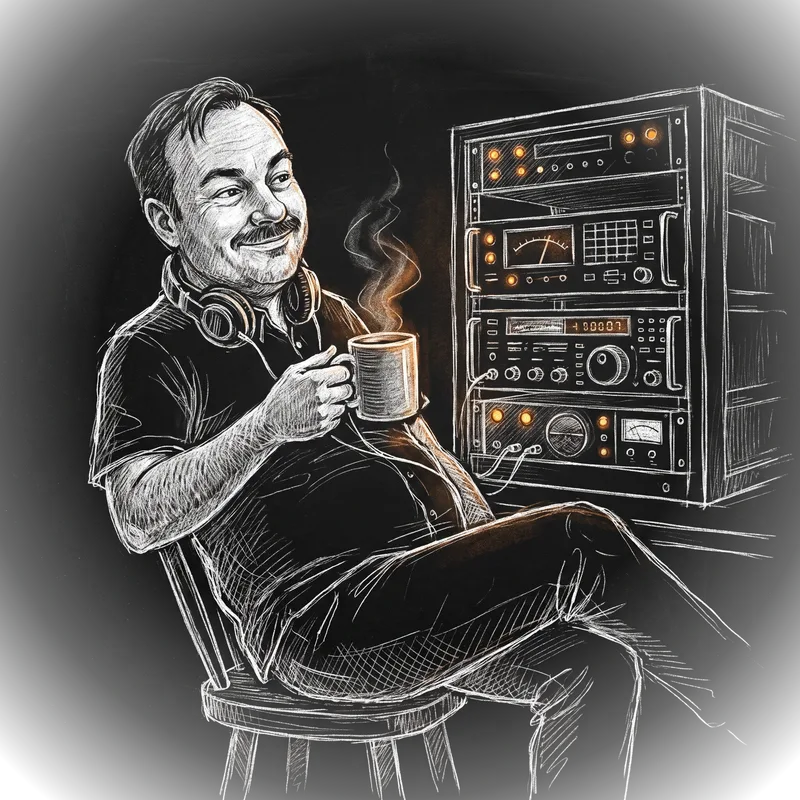
Chalk sketch of the engineer leaning back with a mug of tea, admiring a finished equipment rack
Rack test passed. Kettle on.
The frequency plan has room

This is the first station. Not the last.

None of this was built as a one-off. The director, the player, the transmitter chain, the wire — the rig is station-shaped, not LTBR-shaped. It runs unattended around the clock, heals its own signal, keeps its own books, and would carry a different city, a different lineage, a different band of the dial without asking for anything new.

LTBR.FM is the proof: one person, one rig, a whole station on air all day. What the pirates managed with one transmitter and a stairwell, this rig could do for many. The dial has room.

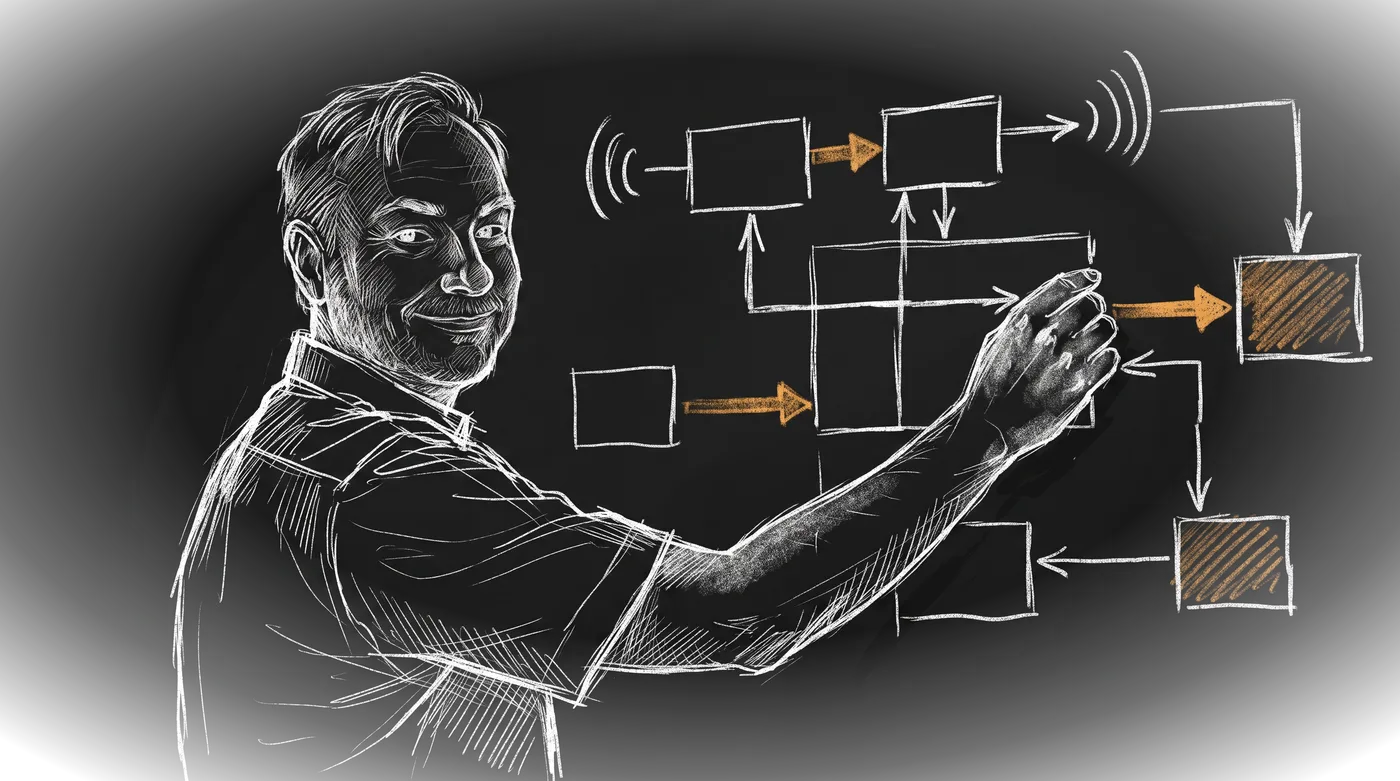
Chalk sketch of the engineer drawing the station's signal chain as a block diagram on a black wall
Rig built & maintained by

Marekthe Station Engineer

Every solder joint, every service, every line — one pair of hands. Built out of love for live radio and everything technology can offer it, and given to everyone, free.