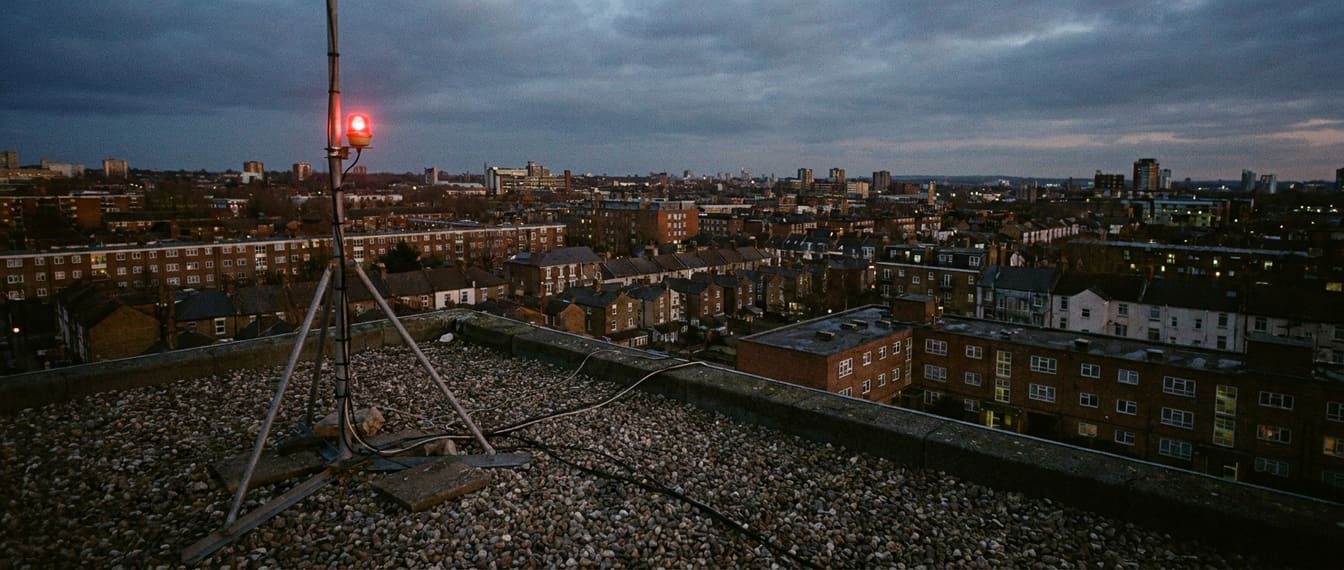
The Receiver keeps itself current.
New versions of the Receiver now install themselves — quietly, the day they go out.
Not a blog. A log. Every change to the signal, written down, numbered and dated — the way a transmitter room keeps its books. Newest sits highest on the band; the log runs back down to 87.5, where it started.

New versions of the Receiver now install themselves — quietly, the day they go out.
LTBR FM lands on smart speakers via TuneIn — Google, Alexa and Siri all answer to the station's name.
The Receiver learns a second look — the Wavemaster 3000, cream and walnut, twin VU meters, dial parked just past 101.
The Receiver — a free little desktop radio for Windows, Mac and Linux. Open it, and London is already playing.
The full programme sheet comes online — today's dated line-up, London times, and how far through the hour you are.
Featured Acts arrives — the artists the station calls its own, in hand-torn watercolour, one voice at a time.
The Broadcasters page goes up — the selectors and night-owls who hold the frequency, faces, shows and all.
If the main transmitter stumbles, the player slips over to the YouTube feed on its own — then hops back the moment the signal heals.
Tracks with lyrics get a marker on the timeline — tap it and the words come up while the song plays.
Two rotary knobs land on the desk — one sets your delay against the live edge, one zooms the timeline. Both remember where you left them.
Install LTBR.FM to your home screen and it opens like a proper app — full screen, its own icon, no browser chrome.
LTBR.FM comes online — the live timeline, the on-air lamp and the stream, on one page. No permission required.